Is it bad to sleep with wet hair? Mostly not the way your grandmother said. The worry that it'll make you sick is a myth. The real cost shows up in your hair and on your pillow.
Products that help
Details ↓- Check price on Amazon
Affiliate link: we may earn a commission at no extra cost to you.
- Check price on Amazon
Affiliate link: we may earn a commission at no extra cost to you.
- Check price on Amazon
Affiliate link: we may earn a commission at no extra cost to you.
Can you get sick from sleeping with wet hair?
No. Healthline's medical source Dr. Chirag Shah says "There is no evidence that one can catch a cold from going to bed with wet hair," because colds come from a virus. The Sleep Foundation agrees, quoting Dr. Dustin Cotliar, who calls the link "more urban legend than scientific fact." Colds are more common in winter because people spend more time indoors together.
Why wet hair breaks more at night
Dermatologist Dr. Adarsh Vijay Mudgil told Healthline that "Hair is at its weakest when it's wet," and turning over in your sleep can snap strands. The Sleep Foundation adds that you may wake up with tangled or broken hair, and that untreated hair can stretch by up to 30% of its length without serious damage, but chemically treated hair is more fragile.
So color-treated, bleached, fine or already-dry hair has the most to lose. If that's you, it's worth a few extra minutes at night. Our guides to frizzy hair and split ends cover what breakage looks like over time.
What about your scalp and pillow?
Damp hair keeps your pillow damp, and fungi like to grow in warm, moist places. Shah says damp hair at bedtime raises the risk of scalp fungal infections, and Malassezia, a fungus on skin, is linked with dandruff and dermatitis. The Sleep Foundation notes there's no direct evidence that wet hair causes acne, but a humid pillow loaded with hair product could make breakouts worse. It recommends changing pillow covers and sheets every one to two weeks.
If your scalp is itchy or flaky most of the time, see our scalp moisturizing guide and a dermatologist.
How to go to bed with wet hair (if you have to)
1. Blot, don't rub
Squeeze the water out with a microfiber towel or a soft old T-shirt. Rubbing with terry cloth is rough on wet strands.
2. Dry as much as you can
Healthline and the Sleep Foundation both suggest drying hair as much as you can before bed. Start your routine earlier so it can air-dry, or use a hair dryer on a low heat setting, since too much heat is its own problem.
3. Detangle gently
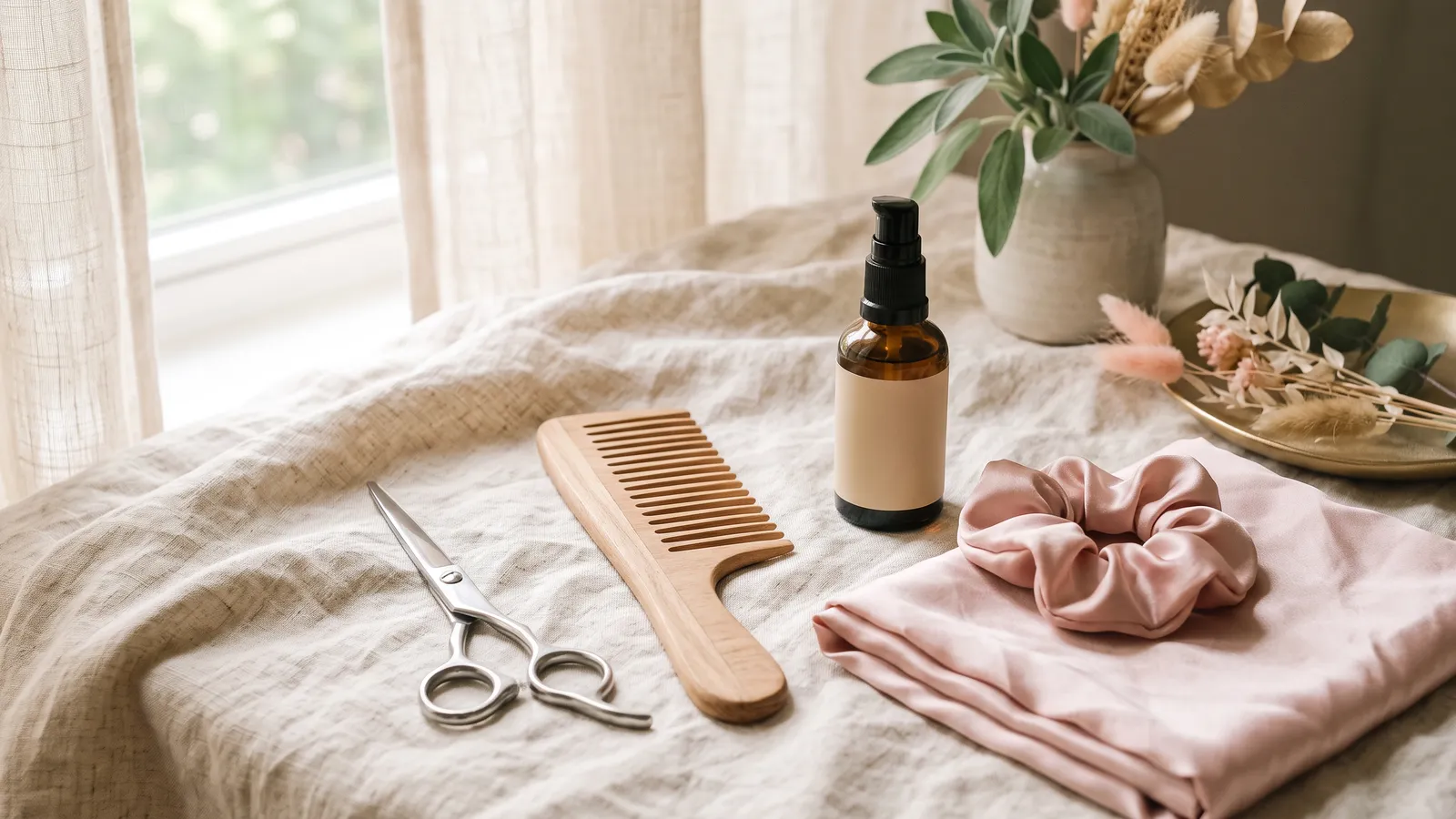
Work through knots with a wide-tooth comb from the ends upward before you lie down, so you're not adding stress on a pillow.
4. Add a little conditioner
Healthline says conditioner helps seal the hair cuticle, reduce friction and make hair easier to detangle. A leave-in is an easy way to do this; see our leave-in conditioners for fine hair.
5. Think about coconut oil
Healthline mentions evidence that coconut oil protects wet hair from breakage because it limits how much water hair absorbs. Skip it if you have seborrheic eczema. Use a small amount so it doesn't transfer onto your pillow.
6. Cut down friction
The Sleep Foundation says silk gives less surface friction than regular cotton, and suggests a hair cap or scarf. Healthline adds the honest caveat that there isn't evidence yet of a silk pillowcase's benefits for hair. Keep hair loose and pulled away from your face; Mudgil advises against braids and tight updos on wet hair.
What we'd buy
These are the three small upgrades that follow the advice above.
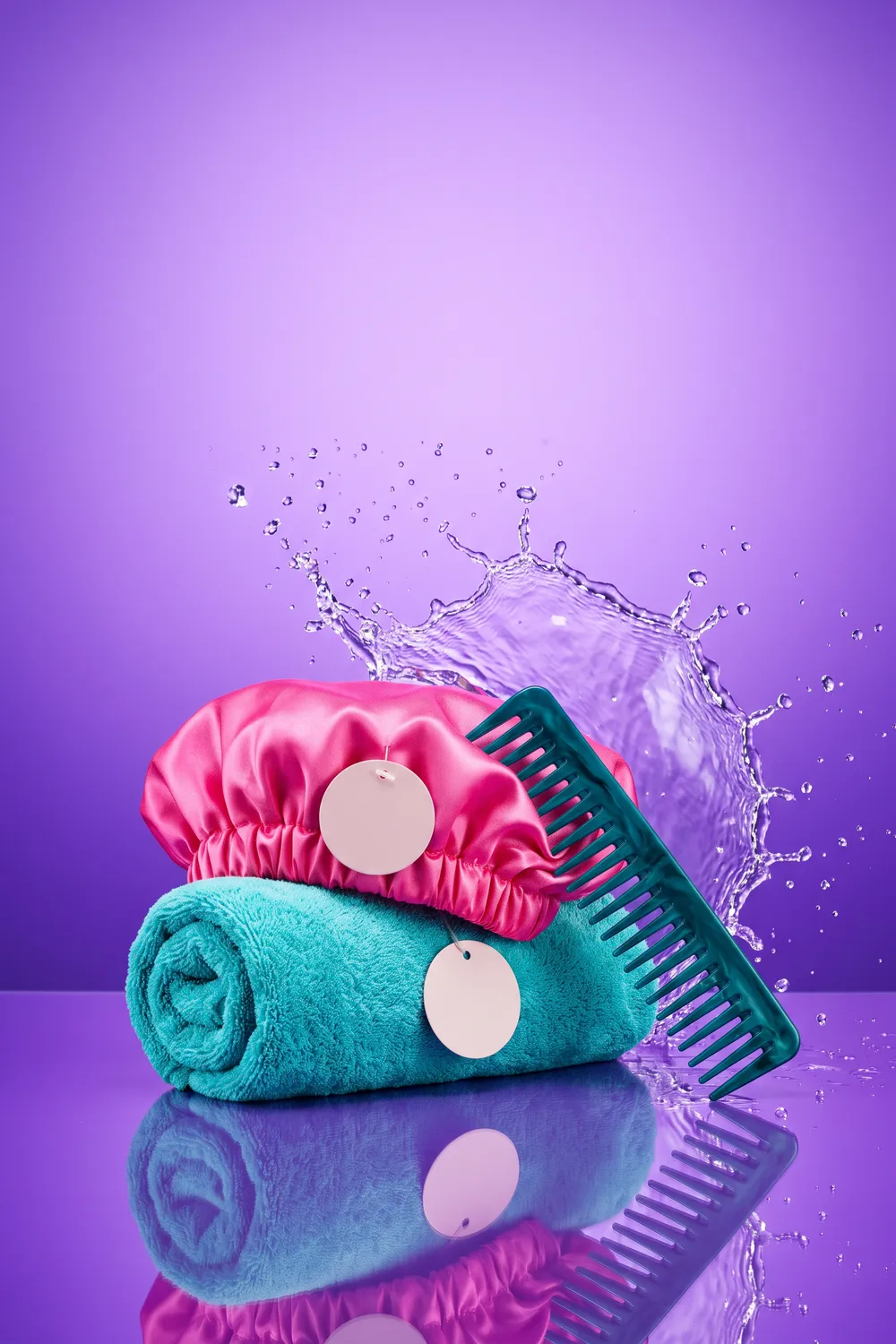
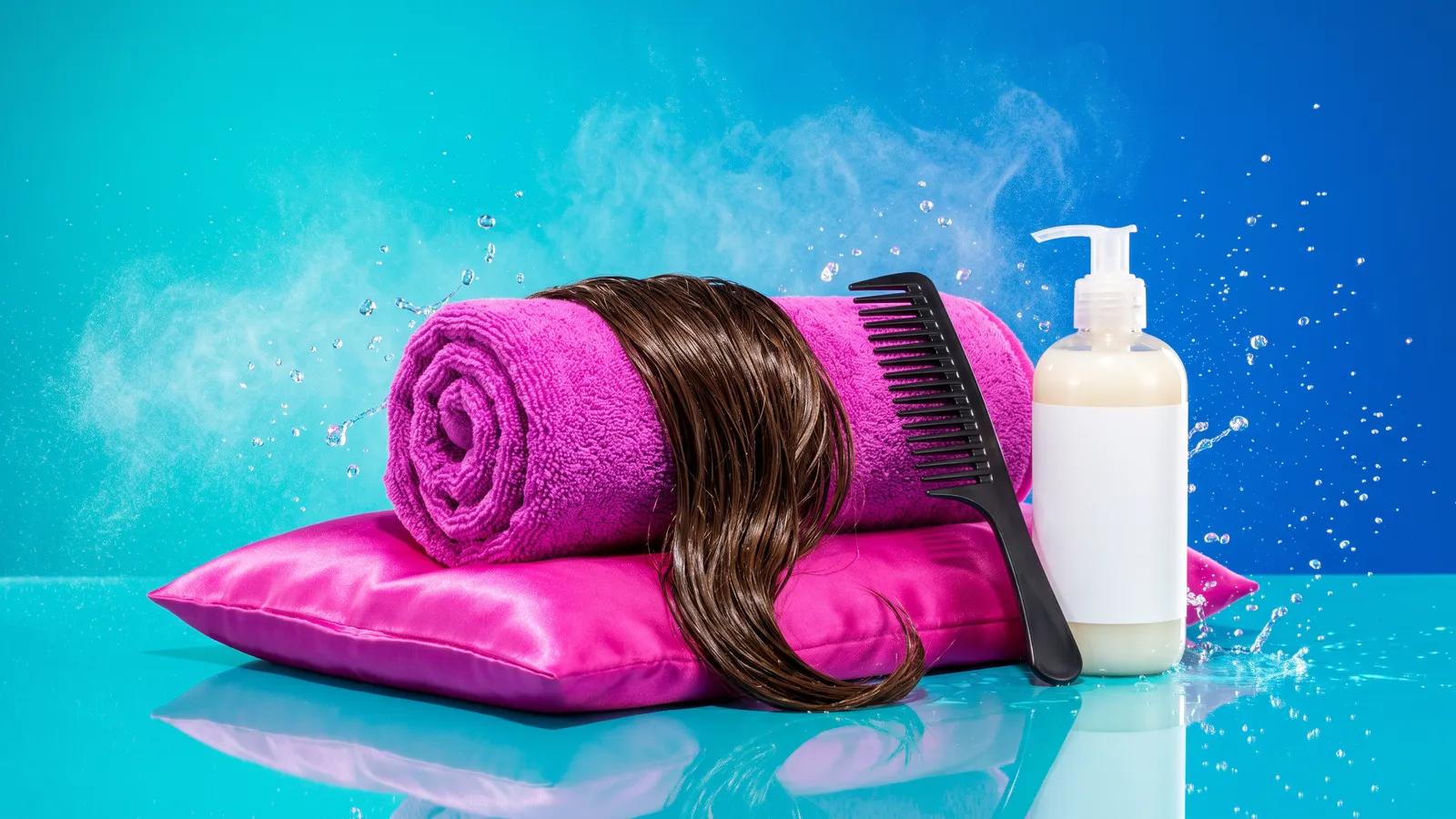
Aquis Rapid Dry Hair Towel
Best for: blotting wet hair without rubbing it.
- A microfiber towel is one of the easiest ways to cut friction on wet strands.
- Wrap and squeeze; don't scrub.
Slip Pure Silk Pillowcase
Best for: less friction than cotton while you sleep.
- The Sleep Foundation says silk has less surface friction than cotton.
- Healthline notes research on hair benefits is still thin, so think of it as a comfort and friction upgrade.
Kitsch Satin Sleep Bonnet
Best for: a budget-friendly way to keep hair covered and smooth.
- The Sleep Foundation suggests a hair cap or scarf.
- Pair it with a wide-tooth comb and a leave-in. Curly hair? See our curly hair routine.
FAQs
Can you get sick from sleeping with wet hair?
No. Colds are caused by viruses, not damp hair. Dr. Shah says there's no evidence that going to bed with wet hair gives you a cold.
Is sleeping with wet hair bad for your hair?
It can be. Wet hair is weaker and breaks and tangles more easily, especially if it's color-treated or fine. An occasional night is unlikely to cause lasting harm.
Is it OK to sleep with wet hair in a braid?
Mudgil's advice to Healthline is to leave wet hair down, since braids and tight updos add strain. If you braid, make it very loose and let hair dry more first.
Does a silk pillowcase help with wet hair?
It gives less friction than cotton, according to the Sleep Foundation, though Healthline says there's no strong evidence yet of benefits for hair. It won't dry your hair, so still blot first.
Is it OK to sleep with wet hair in a bonnet?
A bonnet or scarf can reduce friction, per the Sleep Foundation. Dry your hair as much as possible first so you aren't trapping dampness against your scalp.
Can sleeping with wet hair cause dandruff or a scalp infection?
A damp pillow gives fungi a place to grow, and Shah says it raises the risk. If your scalp is persistently itchy or flaky, see a dermatologist.
What's the fastest way to dry hair before bed?
Blot with microfiber, then use a hair dryer on low heat, or give it some air-drying time (our suggestion: 20 to 30 minutes). The goal is damp, not dripping.
Sleeping with wet hair now and then is fine; make it a habit and your hair, scalp and pillow will tell you.