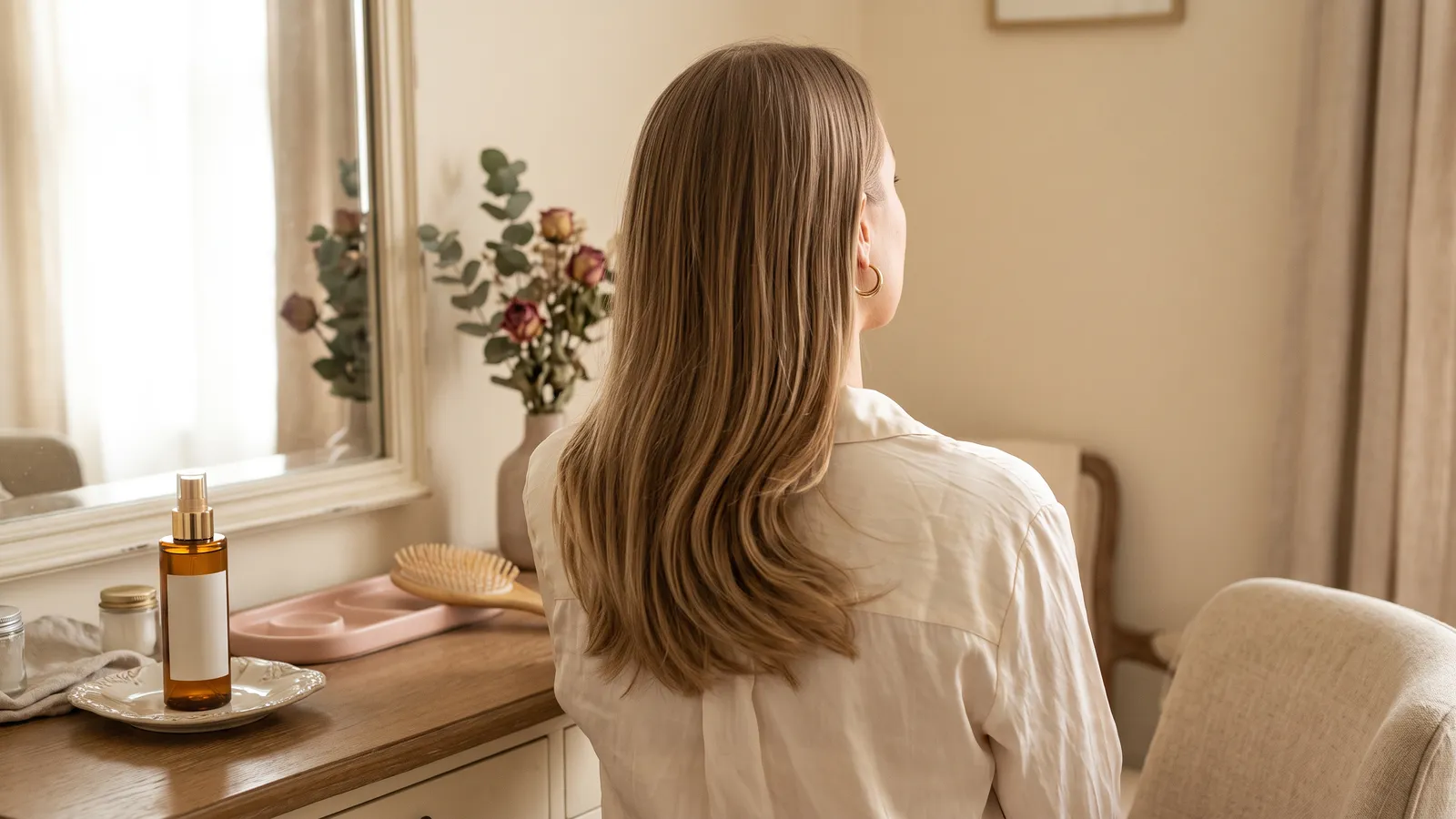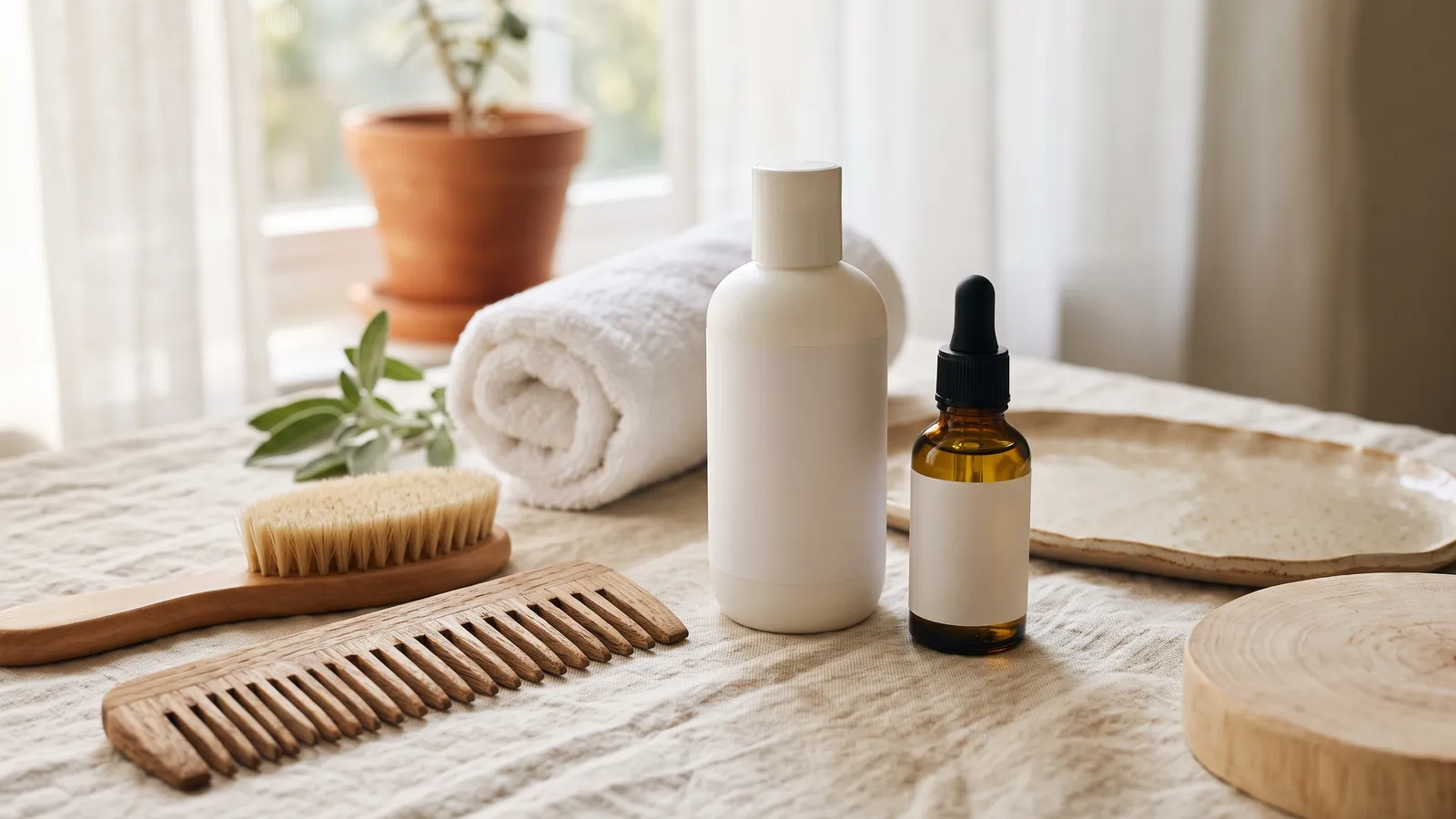
Working out how to moisturize scalp skin is mostly about taking away what dries it out, then adding a little back. Your scalp is skin, so the rules that help dry skin elsewhere (cooler water, gentler cleansers, more humidity) help here too. Below: why it happens, nine steps, and four picks.
Products that help
Details ↓- Check price on Amazon
Affiliate link: we may earn a commission at no extra cost to you.
- Check price on Amazon
Affiliate link: we may earn a commission at no extra cost to you.
- Check price on Amazon
Affiliate link: we may earn a commission at no extra cost to you.
- Check price on Amazon
Affiliate link: we may earn a commission at no extra cost to you.
Why your scalp feels dry and tight
A dry scalp is skin that's lost too much water. The American Academy of Dermatology (AAD) puts it simply: "dry skin happens when skin loses too much water," and it shows up as itchiness and small flakes.
The usual suspects:
- Your shampoo. "Some hair care products can dry and irritate the scalp by stripping the natural oils from your skin," the AAD says.
- Weather. Low humidity and cold climates dry out scalp skin, according to Cleveland Clinic. That's why it often starts when the heating goes on.
- Age. Cleveland Clinic notes that "as you get older, your skin starts to dry out."
- Washing too often. Dermatologist Dr. Marisa Garshick told PureWow that overwashing "can actually strip the scalp of its natural oils and contribute to your dryness."
A clue it really is dryness: Cleveland Clinic says that if your scalp is dry, "the rest of your body may experience dryness too." Dry shins and hands in the same month point the same way.
Dry scalp or something else?
This matters, because the fixes are different. Cleveland Clinic explains that "excess oil causes dandruff, and loss of moisture causes dry scalp," and that dandruff tends to look like "larger pieces of dry skin." The AAD says dandruff is often linked to seborrheic dermatitis, and that psoriasis can make flakes that look like dandruff "but have a silvery sheen." A product you're allergic to can also make your scalp itch.
The AAD's rule of thumb: dandruff usually improves with a dandruff shampoo, "and a dry scalp by switching to a gentle, non-medicated shampoo." This guide covers the second one. If you're not sure which you have, a board-certified dermatologist can tell you.
How to moisturize your scalp: 9 steps
1. Turn the water down
Hot water feels great on a cold morning, but it's hard on dry skin. For dry skin in general, the AAD suggests keeping showers to five to ten minutes in warm water. Do the same for your hair wash: warm to lukewarm, and finish quickly.
2. Switch to a gentle shampoo for dry scalp
This is the biggest single change. Cleveland Clinic's first tip is to "switch to a gentle, moisturizing shampoo." A 2023 review on sensitive scalp suggests washing with "non-irritating, amphoteric, or soft anionic surfactants, without any fragrance." In plain terms: mild cleansers, and no added fragrance if your scalp gets irritated easily.
Good moisturizing shampoos for dry scalp often list glycerin or hyaluronic acid high up and say sulfate-free or fragrance-free on the front. If your lengths are dry too, our best shampoo for dry hair picks cover both.
3. Don't wash more than your scalp needs
There's no single right number. The AAD says to shampoo based on your hair: people with straight hair and an oily scalp may want to wash daily, while dry, textured, curly or thick hair can go longer between washes. Cleveland Clinic's dry-scalp advice is to "wash your hair less frequently." If you wash daily and your scalp feels tight, try every other day for two weeks and see.
An oily scalp needs the opposite approach. If your roots look greasy by evening, our best shampoo for oily hair guide fits you better than this one.
4. Massage with your fingertips, not your nails
Put the shampoo on your scalp, where the AAD says it belongs, and work it in with the pads of your fingers. Nails scratch skin that's already dry. A soft silicone scalp brush is a gentle option if you like the feel of one.
5. Rinse completely
Leftover shampoo is an easy one to miss. Cleveland Clinic says shampoo "left behind after you shower could be irritating your scalp," and the AAD's itchy-scalp guide agrees. Rinse longer than you think you need to, especially at the nape and behind the ears.
6. Condition, and choose what touches your scalp
The AAD says conditioner "moisturizes and detangles your hair." Most conditioner goes on the lengths. If your scalp is dry and your hair isn't fine, some people work a little into the roots and rinse well. Fine hair is the exception: keep conditioner off your roots and use a light spray on the ends, like the ones in our leave-in conditioner for fine hair picks.
7. Add a scalp serum or oil, sparingly
This is the "moisturizer" step. The sensitive-scalp review suggests hydrating products "containing glycerin, hyaluronic acid, oils, or ceramides." A leave-on scalp serum goes on clean, dry skin; part your hair in sections and use a few drops, not a palmful. If you use a plain oil instead, warm two or three drops between your fingertips and press it on the dry spots before a wash day. Too much leaves roots looking greasy.
Patch test first, on a small spot behind your ear, and stop if it stings or itches.
8. Clarify now and then if products build up
Dry shampoo, styling products and hard-water minerals can sit on the scalp. A clarifying shampoo for scalp buildup strips that off, but it's stronger than an everyday wash, so once every week or two is plenty for most people, followed by conditioner. Our guide on what is clarifying shampoo covers how often and who should go easy.
9. Add humidity and protect your part from the sun
Cleveland Clinic suggests you "add more moisture to your home with a humidifier." Run it in the bedroom overnight, and clean it regularly; the AAD says that's to prevent mold.
Sun dries skin too, and your part line gets direct light. An AAD dermatologist suggests a wide-brimmed hat, and the AAD says that if your hair is thinning, you should "either apply sunscreen to your scalp or wear a wide-brimmed hat" (how to apply sunscreen).
What to avoid on a dry scalp
- Hot water and long showers. Keep it warm and quick.
- Fragrance-heavy products if your scalp gets itchy. The sensitive-scalp review suggests skipping fragrance.
- Scrubbing with nails or a stiff brush.
- Daily clarifying or scrub shampoos. Fine occasionally; too strong for every day.
- Piling on oil. A few drops is a moisturizer. A spoonful is buildup.
- Guessing for months. If two to four weeks of gentle care don't help, get it checked.
Picks that help
We chose hydrating shampoos for dry scalp that are mild and non-medicated, plus one serum. None of them is a dandruff product.
Vanicream Shampoo
Best for: a good shampoo for dry scalp that's also sensitive or reacts to fragrance.
- Vanicream calls it "a non-medicated shampoo for sensitive skin," and says it's fragrance-free, sulfate-free and pH balanced, with "no botanical extracts or essential oils."
- Glucoside cleansers with glycerin and panthenol. Vanicream says it also "removes build-up from conditioners, hairsprays, and other hair care products."
- PureWow named it the best fragrance-free shampoo for a dry scalp. Its con: "low lather," so shampoo twice and work it in.
Act+Acre Daily Hydro Hydrating Shampoo
Best for: a scalp hydrating shampoo if you want one built around the scalp, not the lengths.
- Act+Acre says it's "designed to protect the scalp's moisture barrier," with 5% Tilicine and hyaluronic acid, and lists it for straight, wavy, curly and coily hair.
- It's sulfate-free (sodium lauroyl isethionate and glucosides) with glycerin and panthenol. The brand says to apply two pumps to the scalp, starting at the nape, and shampoo twice.
- Keep in mind: it's new, and we found no independent review yet. It also contains essential oils, such as bergamot, so skip it if fragrance bothers your scalp.
The Ordinary Natural Moisturizing Factors + HA for Scalp
Best for: the best scalp serum on a budget, as a leave-on moisturizer.
- The Ordinary describes it as "a light, milky formula designed to support scalp hydration," with hyaluronic acid, squalane and amino acids, and says it won't stick to your hair or weigh it down.
- Directions: "Massage a few drops thoroughly into clean, dry scalp once daily, ideally at bedtime." Don't rinse it out.
- Keep in mind: the brand says to patch test and use it only on unbroken skin. We found no editorial review of it.
Dove Daily Moisture Shampoo
Best for: dry hair and a mildly dry scalp on a drugstore budget.
- Dove's listing says it's "designed for dry hair" and suitable for straight, wavy, coily and curly hair.
- The Good Housekeeping Institute named it best overall shampoo, praising its "perfect balance of both purifying and lightly softening." GH tested it before Dove's recent formula update.
- Keep in mind: it contains sulfates, which some people with a sensitive scalp avoid. If that's you, choose Vanicream instead.
FAQs
What's the best dry scalp shampoo?
The best dry scalp shampoo is a mild, non-medicated one that doesn't leave your scalp tight. That's the AAD's advice for dry scalp too. If your scalp is sensitive, start with something fragrance-free like Vanicream Shampoo. If your flakes don't improve, see a dermatologist rather than switching shampoos again and again.
Do I need a shampoo and conditioner for dry scalp?
Yes, use both. Shampoo cleans the scalp and conditioner moisturizes the hair. A matching shampoo and conditioner for dry scalp is convenient, but the shampoo matters more for your scalp. Rinse both out thoroughly, because leftover product can irritate.
Is a scalp moisturizing shampoo different from a regular moisturizing shampoo?
Sometimes. A scalp moisturizing shampoo is usually designed to be gentle on the skin, so it uses milder cleansers and humectants like glycerin and hyaluronic acid. A regular moisturizing shampoo is often more about softening the lengths. Many products do both; read the label for "scalp" and check whether it's fragrance-free.
What's the best scalp serum for dryness?
Look for a light, leave-on serum with humectants such as hyaluronic acid or glycerin. That's what the sensitive-scalp research suggests for hydration. Use a few drops on clean, dry skin. Avoid serums sold for hair growth or dandruff if dryness is all you're dealing with.
Can clarifying shampoo help scalp buildup if my scalp is dry?
It can, if buildup is part of the problem. Use it once every week or two at most, then condition. On the other days, go back to your gentle shampoo, because a deep-cleaning wash every day will dry your scalp further.
How to moisturize hair and scalp at the same time?
Wash your scalp with a gentle shampoo, condition your lengths every time, and put a leave-in or a drop of oil on damp ends. The AAD says dry, curly or thick hair can go longer between washes, which also gives your scalp a break. Then add a scalp serum only where the skin feels tight.
Start with cooler water and a gentler shampoo this week; for most dry scalps, those two changes do the most.