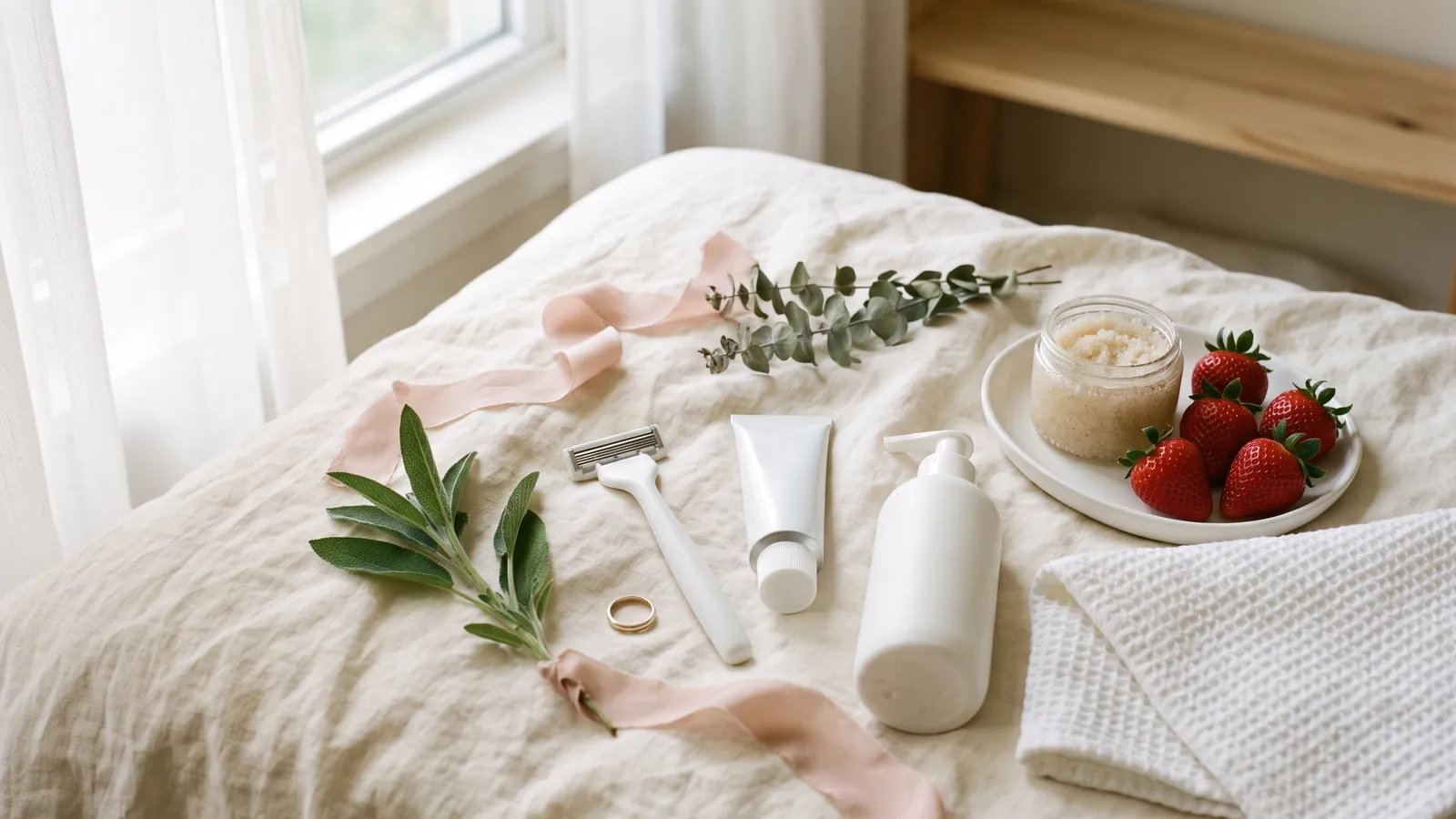
The best exfoliator for strawberry skin is usually a leave-on lotion with a gentle acid, such as salicylic, lactic or glycolic acid, used most days. A grainy scrub is a once- or twice-a-week extra, not the main event. Pair it with a rich moisturizer and a fresh razor, and give it four to six weeks.
Products that help
Details ↓- Check price on Amazon
Affiliate link: we may earn a commission at no extra cost to you.
- Check price on Amazon
Affiliate link: we may earn a commission at no extra cost to you.
- Check price on Amazon
Affiliate link: we may earn a commission at no extra cost to you.
- Check price on Amazon
Affiliate link: we may earn a commission at no extra cost to you.
Why strawberry legs happen
"Strawberry legs" isn't one condition. It's a look: small dark or red dots on your legs that resemble the seeds on a strawberry. Dermatologist Dr. Matthew Janik told Cleveland Clinic the dots "look like seeds on the pitted surface of strawberries," and that "they're harmless."
The usual causes, per Cleveland Clinic:
- Clogged pores. When you shave or wax, oil trapped in the pore meets the air. Janik explains it "combines with oxygen (oxidizes) and turns darker than usual."
- Shaving. "An old, dull razor or shaving without shaving cream" can cause razor burn and ingrown hairs that look like dots.
- Dry skin. It doesn't cause the dots by itself, but dry legs make them more visible, and shaving dry skin irritates it.
- Keratosis pilaris (KP). A different condition that looks similar. The American Academy of Dermatology (AAD) describes KP bumps as "plugs of dead skin cells," most often on the upper arms and the front of the thighs.
- Folliculitis. Inflamed or infected hair follicles. These bumps are red and often itchy or sore, which is your cue to stop self-care and get them checked.
Cleveland Clinic also notes that the lighter your skin, the more visible the dots are. Most of these causes respond to the same three habits: exfoliate, moisturize, shave better.
How to get rid of strawberry legs, step by step
1. Check which kind of dots you have
Run a hand over your shins and thighs. Flat dark dots that look like tiny blackheads are usually clogged pores. Rough, sandpapery bumps, often worse in winter, point to KP; the AAD says "many people say the bumps clear during the summer only to return in the winter." Red bumps that itch, hurt or have a white or yellow top are a different story (see the box further down). Cleveland Clinic's advice: "If you have any pain, swelling or itching, talk to your healthcare provider."
2. Exfoliate gently, with a loofah or washcloth
For KP, the AAD's self-care plan starts with gentle exfoliation using "a loofah, buff puff, or rough washcloth." The key word is gentle: the AAD warns to "avoid scrubbing your skin, which tends to irritate the skin and worsen keratosis pilaris." So a loofah for keratosis pilaris is fine, used with light pressure in the shower. Rinse it and let it dry between uses.
3. Add chemical exfoliants for keratosis pilaris and clogged pores
After the shower, the AAD suggests a keratolytic, which it says is another name for a "chemical exfoliator." It lists alpha hydroxy acids, glycolic acid, lactic acid, retinoids, salicylic acid and urea. On legs, that usually means a rough and bumpy skin lotion with one or two of these. Cleveland Clinic adds that chemical exfoliants work "without the irritation that scrubbing can cause."
Use them exactly as the label says. The AAD notes that using too much, or too often, "can cause raw, irritated skin," and to stop for a few days if that happens. If you've read our glycolic acid face wash guide, it's the same family of acids, just in body-strength products made for thicker leg skin. Don't swap a face product onto your legs, or a body product onto your face.
4. Moisturize within 5 minutes of every shower
This is the step people skip, and it's the one that makes dots look softer fastest. The AAD's KP advice: apply moisturizer "to damp skin within 5 minutes of bathing," choose "a thick oil-free cream or ointment rather than a lotion," and look for one "that contains urea or lactic acid." Its treatment page suggests moisturizing "at least 2 or 3 times a day." A good moisturizer for strawberry skin can double as your chemical exfoliant if it has lactic acid or urea in it. Cleveland Clinic also says to skip products with fragrance or dyes.
5. Shave smarter
Most strawberry legs show up right after shaving, so this step matters. The AAD's shaving tips:
- Shave at the end of a shower, when skin is warm and soft. Janik suggests "short, light strokes."
- Always use a shaving cream or gel. If your skin is dry or sensitive, the AAD suggests one that says "sensitive skin" on the label. Never dry shave.
- "Shave in the direction that the hair grows." The AAD's razor bump tips say shaving "against the grain" causes irritation.
- Rinse after each swipe, and replace your blade or disposable razor after 5 to 7 shaves.
- Store the razor somewhere dry, not in the shower.
Skip your acid lotion on freshly shaved legs if it stings. Use it at night instead, or on non-shaving days.
6. Consider a different way to remove hair
If shaving keeps setting off bumps, it may be the hair removal itself. The AAD says "shaving or waxing skin with keratosis pilaris can cause more bumps," and that laser hair removal can remove hair without a flare-up. Cleveland Clinic's Janik also mentions epilators ("like waxing but causes less injury to your skin," though it stings), electrolysis and laser, which he calls "especially good options for thick, coarse or curly hair." Laser and electrolysis take several sessions, and some hair can grow back.
7. Keep showers short and warm, and wear breathable clothes
Hot, long showers dry skin out, and dry skin makes every kind of dot more obvious. The AAD suggests a bath or shower of "20 minutes or less," with "warm rather than hot water," once a day. A humidifier helps in dry winter air. For bumps that come from irritated follicles, Cleveland Clinic suggests "breathable clothing to keep sweat from getting trapped between your clothes and skin." Change out of sweaty leggings soon after a workout.
8. Wear sunscreen on bare legs
Glycolic, lactic and salicylic acids can make skin more sun-sensitive. The FDA says AHAs increase UV sensitivity, and Janik warns: "Be sure to use sunscreen if you are going outside." Use a broad-spectrum sunscreen on any leg skin you're exfoliating and leaving uncovered. And skip self-tanner while you sort out the bumps: the AAD says self-tanners "tend to make the bumps more obvious rather than hide them."
How long until legs look smoother?
Give it time. The AAD says to tell a dermatologist if you don't see improvement "after following your treatment plan for 4 to 6 weeks." With KP, smoother skin lasts only as long as the routine does. Dermatologist Dr. Lindsey Bordone told NBC Select that once you stop the routine, KP symptoms usually come back. The good news, per the AAD: for many people, KP fades gradually over the years.
Picks that help
All four come from dermatologist recommendations in NBC Select's keratosis pilaris guide and match the ingredients the AAD names. Use one leave-on lotion, not three.
CeraVe SA Lotion for Rough & Bumpy Skin
Best for: a daily exfoliating lotion for rough, dotted legs. Drugstore.
- CeraVe says it combines salicylic acid, lactic acid and hyaluronic acid with three ceramides, and is "designed to improve your skin's texture by exfoliating and hydrating it." It's labelled free of added fragrance and non-comedogenic.
- NBC Select named it the best overall lotion for KP. Board-certified dermatologist Dr. Michael Cameron "often recommends this cream to his patients because of its exfoliating and moisturizing benefits."
- Keep in mind: the label says "apply to affected areas only" and "do not apply over a large area of the body," and it carries an AHA sunburn alert.
First Aid Beauty KP Bump Eraser Body Scrub with 10% AHA
Best for: an exfoliating scrub for strawberry legs, once or twice a week. Mid-range.
- First Aid Beauty calls it "a chemical and physical exfoliating body scrub" with pumice and 10% AHA (glycolic and lactic acid), designed "to help reduce the appearance of keratosis pilaris." The brand lists strawberry skin among the concerns it's made for.
- NBC Select's best body scrub. Board-certified dermatologist Dr. Michele Farber says its AHAs "help improve the skin's texture and smooth away bumps and roughness."
- Keep in mind: it's a scrub, and the AAD warns against scrubbing KP. Follow the brand's "1-2x a week," use light pressure, and skip it on irritated or freshly shaved skin. The original is unscented; scented versions exist too.
AmLactin Daily Nourish Lotion
Best for: a lactic acid lotion for KP that doubles as your everyday body moisturizer. Drugstore.
- AmLactin says it's "powered by 12% lactic acid" and "gently exfoliates to smooth dry, rough, or uneven skin." It's fragrance-free and dye-free.
- Board-certified dermatologist Dr. Marisa Garshick told NBC Select it "has the benefit of having both an exfoliating component and serving as a daily moisturizer." NBC lists it under its older name, Daily Moisturizing Lotion.
- Keep in mind: the label warns of "mild stinging" on sensitive or broken skin, and it has an AHA sunburn alert. It's also our body pick in the best lotion for aging skin roundup.
Eucerin Roughness Relief Lotion
Best for: a urea lotion for very dry, rough legs. Drugstore.
- Eucerin says it has a "Triple Moisturizing Complex of 10% Urea, Ceramide and Natural Moisturizing Factors" and "helps smooth rough and bumpy skin." It's paraben-, dye- and fragrance-free.
- Urea is one of the two moisturizer ingredients the AAD names for KP, alongside lactic acid.
- Keep in mind: newer bottles say "Roughness Smoothing." NBC Select's pick (via Cameron) is the thicker Roughness Relief Cream; we found no independent review of the lotion itself.
FAQs
What is the best exfoliator for strawberry skin?
For most people, a leave-on lotion with a gentle acid, used most days, rather than a harsh scrub. The AAD lists glycolic, lactic and salicylic acids and urea as chemical exfoliators for KP. CeraVe SA Lotion and AmLactin Daily Nourish are two widely recommended options.
Is an exfoliating scrub for strawberry legs a good idea?
Once or twice a week, gently. Garshick told NBC Select to limit physical exfoliation to "once or twice per week," and NBC's experts warn harsh bead scrubs can make things worse. A scrub with acids, like the KP Bump Eraser, is the extra step, not the base of your routine.
What's the best lotion for KP?
One with urea or lactic acid, applied to damp skin within five minutes of a shower, as the AAD suggests. NBC Select's dermatologists picked CeraVe SA Lotion as the best overall lotion for KP, with AmLactin and Eucerin's urea cream also on the list.
Is AmLactin good for KP?
It's one of the options dermatologists suggest. Its 12% lactic acid lines up with the AAD's advice to use a moisturizer with lactic acid, and Garshick likes that it exfoliates and moisturizes in one step. Expect a little stinging on freshly shaved skin.
Does glycolic acid help KP?
The AAD lists glycolic acid among the chemical exfoliators for KP. On the body you'll find it in scrubs and lotions, like the 10% AHA in First Aid Beauty's scrub. It raises sun sensitivity, so wear sunscreen on bare legs.
Does a KP body wash work?
A body wash for keratosis pilaris, such as CeraVe's SA Body Wash, can be part of the routine, but it rinses off after a minute. The AAD's plan puts more weight on gentle exfoliation in the shower and a leave-on product and moisturizer afterward, so think of a wash as a bonus, not the fix.
Can I use a loofah for keratosis pilaris?
Yes. The AAD names a loofah as one way to exfoliate gently, alongside a buff puff or a rough washcloth. Use light pressure, don't scrub, and let it dry fully between showers.
Exfoliate gently, moisturize within five minutes of every shower, and give your razor some respect: that's most of the fix.