How to stop under-boob sweat comes down to three things: less trapped moisture, less friction, and less odor. You can't switch sweat off under your breasts, but you can make it much easier to live with.
Products that help
Details ↓- Check price on Amazon
Affiliate link: we may earn a commission at no extra cost to you.
- Check price on Amazon
Affiliate link: we may earn a commission at no extra cost to you.
- Check price on Amazon
Affiliate link: we may earn a commission at no extra cost to you.
- Check price on Amazon
Affiliate link: we may earn a commission at no extra cost to you.
Why under-boob sweat happens
It's normal. Lauren Zamborsky, a dermatology nurse practitioner at Cleveland Clinic, explains that moisture gets trapped under your breasts "because it's where skin touches skin," and that the area "has less airflow to help sweat evaporate." Sweat collects instead of drying.
That trapped moisture has two side effects. Skin that stays damp rubs more, and Cleveland Clinic notes that "moisture can make chafing much worse." Odor follows too: dermatologist Dr. Jessie Cheung told TODAY that "body odor is caused by bacteria that feed on sweat."
So the plan below tackles each part: moisture first, then friction, then odor.
How to stop under-boob sweat, step by step
1. Start with clean, completely dry skin
Wash under your breasts with soap and water in the shower. Then dry the fold properly. Lift each breast and pat the crease with a towel, rather than a quick swipe. Everything else in this list (powder, gel, deodorant) works best on dry skin.
2. Shower and change after you sweat
Zamborsky's advice after a workout: "it's going to be best if you can shower afterward." If you can't, at least change into clean, dry clothes. A damp sports bra keeps the moisture right where you don't want it.
3. Wear a supportive bra
Cleveland Clinic says to "make sure you're wearing a supportive bra." Support lifts the breast off the skin below it, which means less skin-on-skin contact. If your bra has removable pads, Zamborsky says that "eliminating the removable padding that comes in your sports bra can make a huge difference."
4. Choose breathable fabrics, and skip tight synthetics
For everyday wear, Cleveland Clinic advises against tight shirts or shirts made with "synthetic materials such as nylon, acrylic or spandex," and suggests "loose-fitting, breathable fabrics like cotton." The American Academy of Dermatology gives the same tip for heavy sweating: "Wear breathable fabrics like cotton." The AAD also suggests dress shields, which protect clothes from sweat marks.
5. Dust on talc-free powder before your bra
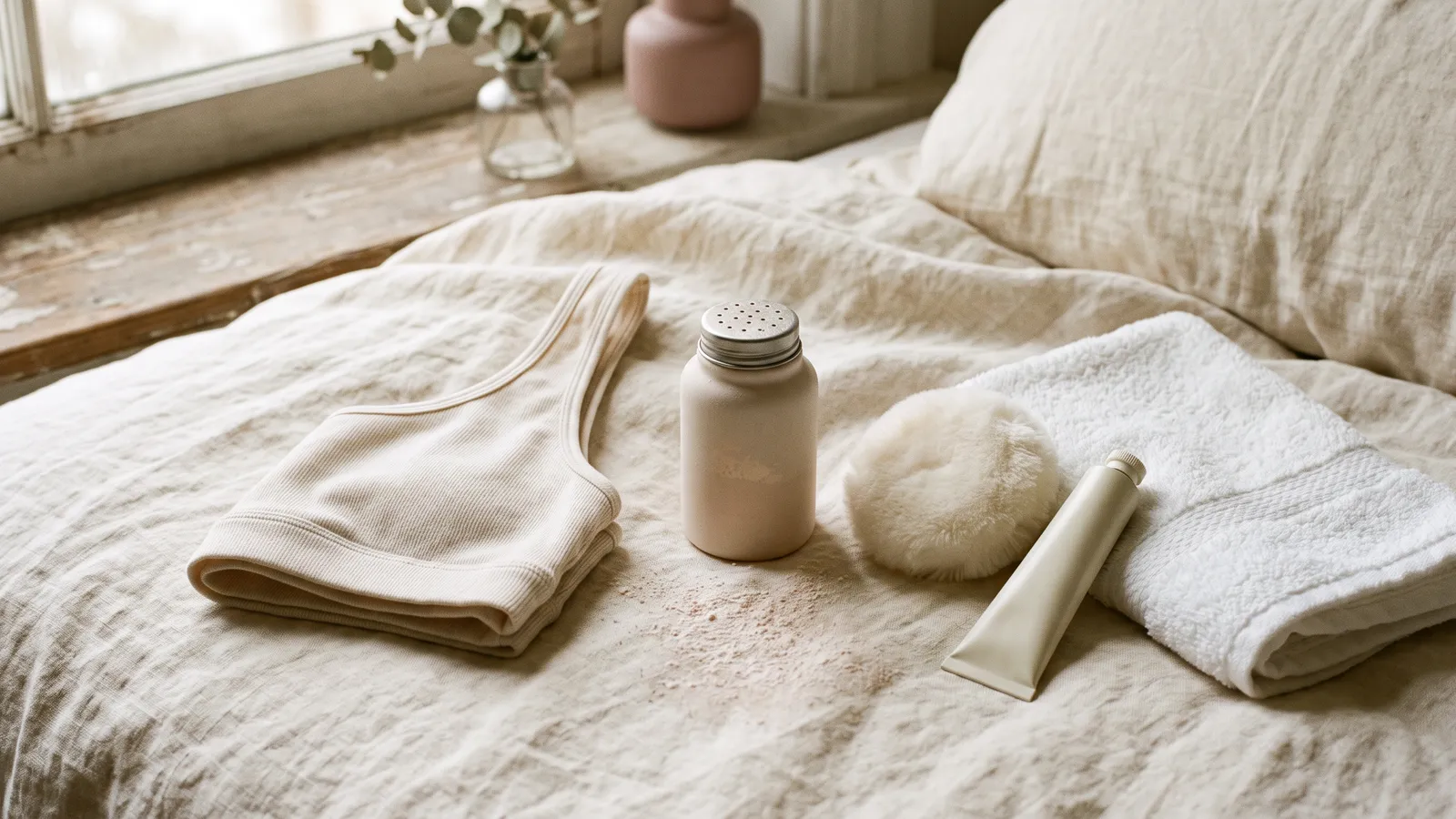
Zamborsky says "talc-free baby powder can be a useful tool to combat sweat," and to "apply the powder to your skin before you put on your bra and shirt." A powder puff gets it into the fold without a cloud. Shake off the extra.
6. Add a barrier cream or gel where skin rubs
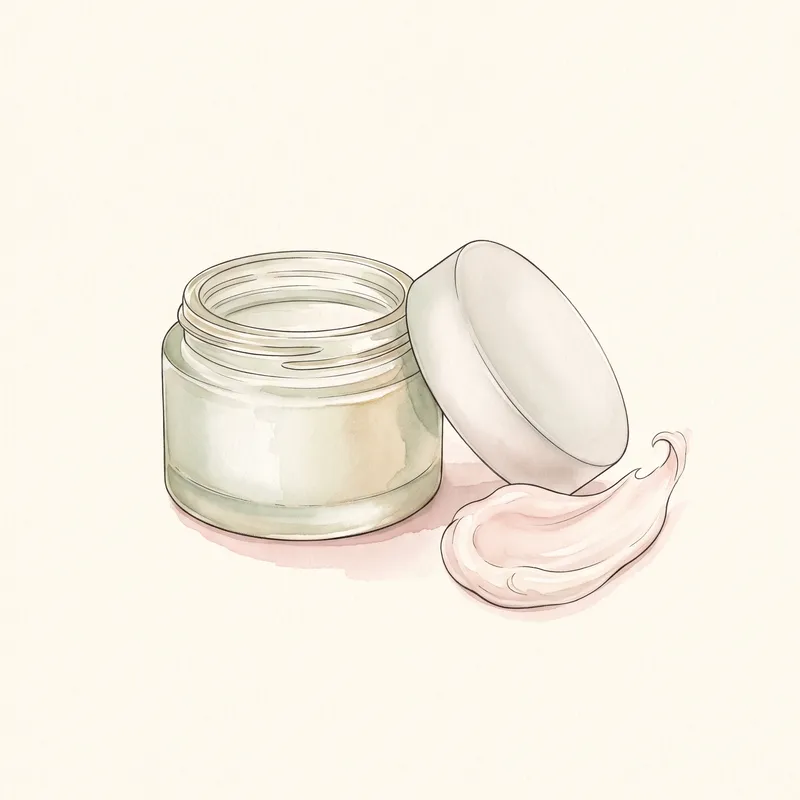
If the crease feels sore by the end of the day, friction is part of the problem. Cleveland Clinic says "using a skin barrier balm or cream can reduce friction," applied "to clean, dry skin before you put on your bra." Dermatologist Dr. Shari Marchbein told NBC Select the two work well together: "the cream can work as a barrier and the powder, in turn, can work to absorb excess moisture." Our best anti-chafing products list has gels and sticks for this.
7. Use a whole body deodorant for odor
Regular underarm deodorant isn't made for the thinner skin under your breasts. Dermatologist Dr. Marisa Garshick told NBC Select that "using regular deodorant all over the body can lead to irritation, especially in sensitive areas." A whole body deodorant is designed for these spots. Dermatologist Dr. Michele Green says they're fine for "more sensitive areas like the groin or under the breasts." Our picks are in the best whole body deodorant roundup.
Remember what deodorant does and doesn't do. The AAD puts it simply: "Antiperspirants help reduce sweating. Deodorants don't." A whole body deodorant handles the smell, while the powder and fabric handle the wetness.
8. Keep your antiperspirant on your underarms
It's tempting to swipe your antiperspirant under your breasts. Don't, unless a doctor tells you to. In the US, antiperspirants are over-the-counter drugs, and the FDA's antiperspirant monograph requires the label direction "apply to underarms only." The same rules require the warning "do not use on broken skin." If you sweat heavily everywhere, that's a conversation for a dermatologist. As Cheung told TODAY, "there are prescriptions and other treatments."
Want to know more about the difference? Read does aluminum-free deodorant work?
What to avoid
A few habits make under-boob sweat harder to manage:
- Regular underarm deodorant under the bust. Garshick says using it all over the body "can lead to irritation, especially in sensitive areas." Use a whole body formula instead.
- Antiperspirant under the bust. The label says "apply to underarms only."
- Tight synthetic tops and padded sports bras. Cleveland Clinic names nylon, acrylic and spandex, and suggests taking out removable pads.
- Products on broken or irritated skin. Garshick advises keeping deodorant away from it.
- Staying in damp clothes. Change into dry ones as soon as you can, as Zamborsky suggests.
A two-minute morning routine
- Shower, wash under the breasts, and pat the fold dry.
- If the crease rubs, smooth on a thin layer of barrier gel or cream and let it dry.
- Swipe on a whole body deodorant made for the area.
- Dust talc-free powder into the fold.
- Put on a supportive bra in a breathable fabric.
Pack a spare bra or top on hot or busy days. The AAD suggests carrying "a spare set of clothes, so you can change into something dry if needed."
Picks that help
Happy Curves Whole Body Deodorant Stick
Best for: odor control under the breasts from a solid stick, with no mess on your fingers.
- Happy Curves says it's designed for "all body parts, including private areas and under breasts," and calls it pH-balanced and aluminum-free.
- It's built on tapioca starch and magnesium hydroxide, with no baking soda on the ingredient list.
- Keep in mind: we found no editorial review of it, and all four stick scents contain fragrance.
Lume Whole Body Deodorant Cream Tube
Best for: one deodorant for everywhere, with the strongest editorial backing of any whole body pick we found.
- NBC Select named it best overall among whole body deodorants.
- Lume says mandelic acid "lowers pH to block odor before it starts," and claims 72-hour odor control. It's aluminum-free and baking soda-free.
- There's an unscented version. NBC's one con is a strong smell at first on scented ones.
Monistat Chafing Relief Powder Gel
Best for: a clear, fragrance-free layer in the crease when skin rubs.
- NBC Select's best gel among anti-chafing products. The brand says it's "safe to use under arms, under breasts, on the bikini area, and on inner thighs."
- Monistat says it's fragrance-free, non-greasy and "dries clear, so it doesn't stain."
- It's an OTC product with dimethicone 1.2% listed as a skin protectant, so follow the drug facts label.
Megababe Body Dust
Best for: the talc-free powder step.
- Megababe says this "talc-free ultrafine body powder absorbs sweat," and suggests its Dust Puff for "mess-free application under boobs."
- Its base is cornstarch, arrowroot and kaolin clay.
- Keep in mind: it also contains baking soda and lavender oil. If those bother your skin, try a plain talc-free powder instead. We found no editorial review of it.
FAQs
Does whole body deodorant stop boob sweat?
No, it works on odor. The AAD says "Antiperspirants help reduce sweating. Deodorants don't." For wetness under the bust, rely on powder, fabric choice and drying off, and use the deodorant for smell.
Is under-boob sweat normal?
Yes. Cleveland Clinic explains that the skin under your breasts touches other skin and gets less airflow, so sweat collects there instead of evaporating.
Can you put antiperspirant under your breasts?
Not the regular kind. US antiperspirant labels follow FDA rules that say "apply to underarms only." Use a whole body deodorant for odor under the breasts and powder for wetness. A dermatologist can advise if you sweat heavily there.
Does powder help boob sweat?
It helps. Cleveland Clinic's Zamborsky says talc-free powder "can be a useful tool to combat sweat," applied before your bra and shirt. Pair it with a barrier cream if the skin also rubs, as Marchbein suggests.
What's the best bra for boob sweat?
A supportive one in a breathable fabric. Cleveland Clinic says support matters, and that taking out removable sports-bra pads "can make a huge difference." Loose, breathable layers over it help too.
Can I use deodorant under my breasts?
Yes, if it's a whole body deodorant that lists the area. Dr. Michele Green told NBC Select these are fine "under the breasts," while Garshick warns regular deodorant all over the body can irritate. In our best whole body deodorant picks, Secret, Hume and Happy Curves name the under-bust, and Lume lists skin folds.
When should I see a doctor about sweat under my breasts?
If the skin is red, sore, broken, itchy or doesn't settle in a few days, see a healthcare provider. Cleveland Clinic's advice is "don't hesitate to speak to a healthcare provider." Don't put deodorant or powder on broken skin in the meantime.
Clean, dry skin, a supportive bra, powder and a whole body deodorant: that's the routine, and it takes about two minutes.