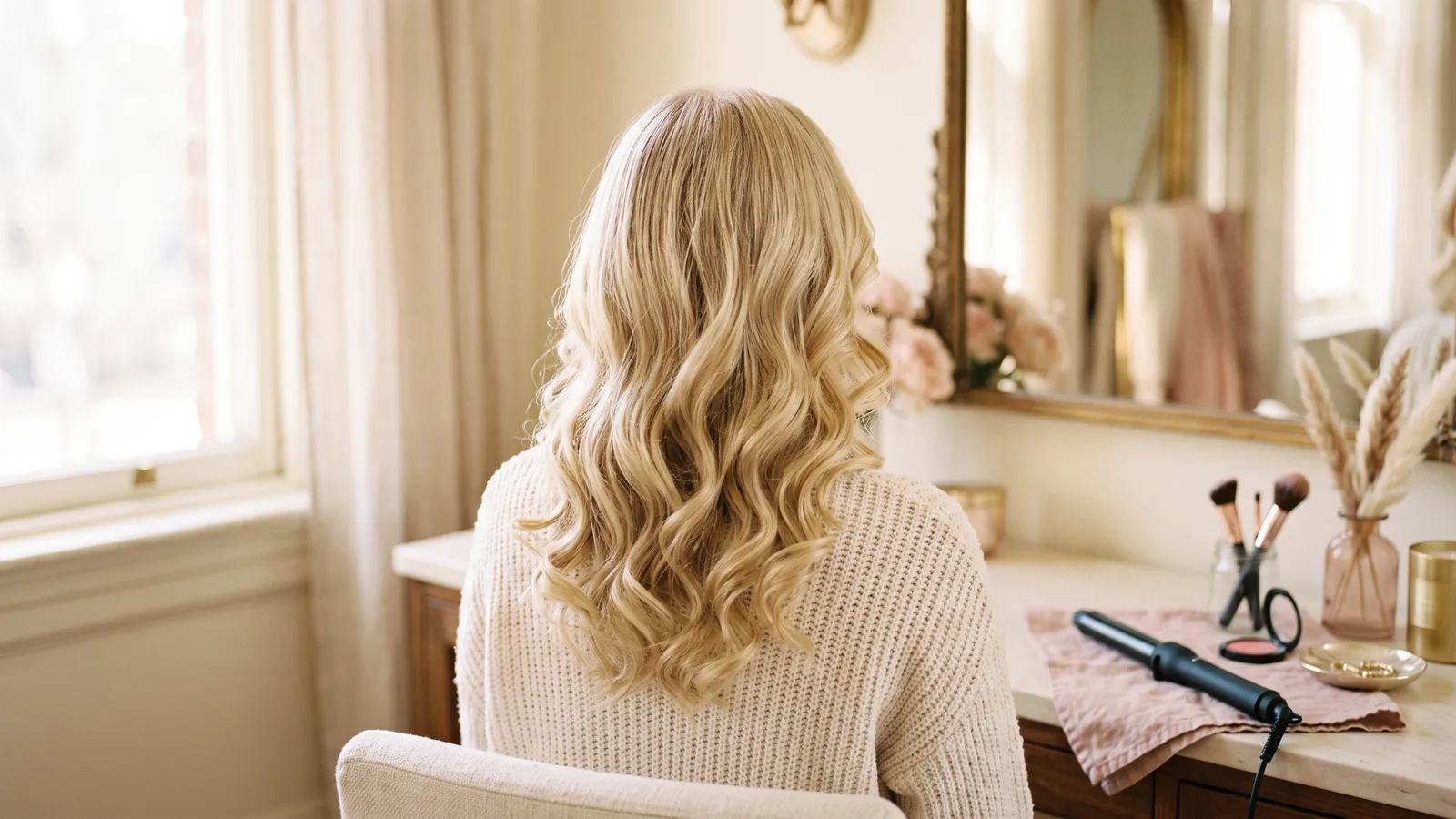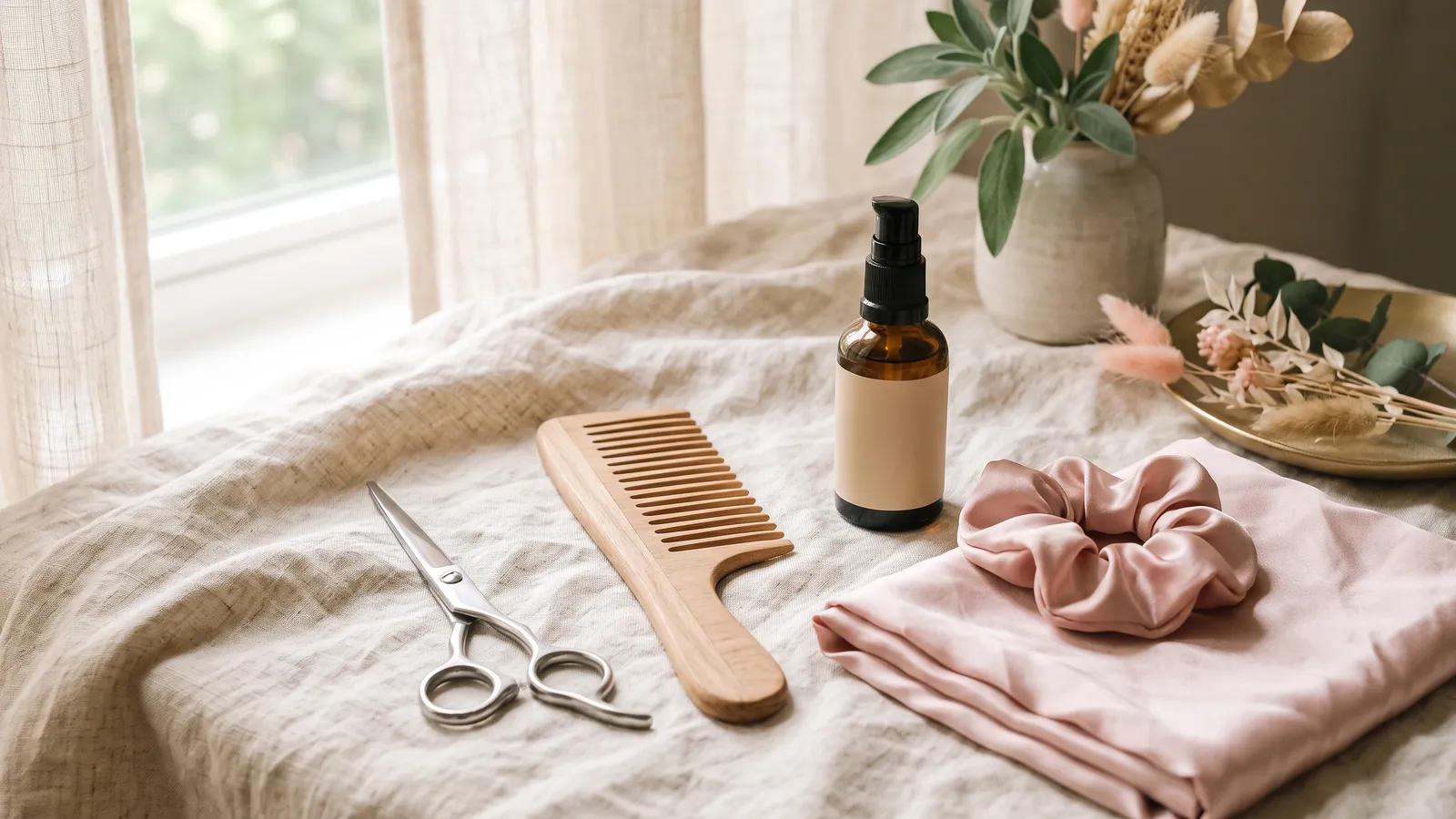
Every hair treatment for split ends you'll see on a shelf works the same way: it coats the frayed tip so it lies flat and catches less light. That's useful, and it buys you time between haircuts. But it washes out. Below: why ends split in the first place, the trim you actually need, eight habits that slow new splits down, and four products that help ends look and feel better in the meantime.
Products that help
Details ↓- Best drugstore conditioner for damaged hairL'Oréal Paris Elvive Total Repair 5 Damage-Erasing BalmDrugstoreCheck price on Amazon
Affiliate link: we may earn a commission at no extra cost to you.
- Check price on Amazon
Affiliate link: we may earn a commission at no extra cost to you.
- Check price on Amazon
Affiliate link: we may earn a commission at no extra cost to you.
- Check price on Amazon
Affiliate link: we may earn a commission at no extra cost to you.
Why do split ends happen?
Each hair has a protective outer layer called the cuticle, made of overlapping scales. When it wears away, the softer inner fibers fray apart, and the tip splits in two (or three, or a little "tree"). A 2015 review of hair cosmetics puts it simply: "split ends happen when the cuticle is removed (damaged)".
Ends get the worst of it because they're the oldest part of your hair. The same review describes weathering as "progressive degeneration from the root to the tip", so a strand that's shoulder length has had a year or more of washing, brushing, heat and sun. Researchers at McGill's Office for Science and Society list the usual causes as heat styling, chemical treatments and rough handling.
Friction matters most day to day. Split ends "form more readily from the abrasion (friction) in combination with torsional deformations", the review says: in plain words, rubbing plus twisting. Think towel-scrubbing, brushing out knots, and tight elastics.
Can a hair treatment for split ends fix them?
No product can permanently mend a split end. McGill's explainer is direct: "Haircuts are the only effective way to get rid of split ends." Products "cannot permanently repair split ends, but they can temporarily mend them."
Here's what's happening when a product seems to work:
- Conditioners and masks carry a positive charge that sticks to damaged, negatively charged hair. Protein fragments in them are attracted to keratin, so they cling to the frayed tip.
- Silicones and oils coat the strand. The 2015 review says silicones can "lubricate and seal cuticle cells", and that oil treatments reduced split-end formation in lab tests on hair tresses.
- All of it washes out. McGill notes the effect of silicone-based products is temporary and "will wash away with the next shampooing."
So think of a split-end serum as makeup for your ends, not a fix. It makes them look better, and it can lower the friction that causes the next split. That second part is the real win.
How to get rid of split ends: trim, then 8 habits
1. Get the split ends trimmed
Snip just above the split, not at it. Splits can keep fraying upward, so a Healthline report notes that waiting longer can mean more hair has to come off. If you're growing your hair, stylist Lisa Huff suggests a quarter to half an inch every 12 weeks; salon owner Michael Fuzailov puts the average at every 3 to 4 months, and sooner for hair that's colored or heat-styled. Fine hair tends to need trims more often, because it breaks more easily.
2. Shampoo your scalp, not your ends
The American Academy of Dermatology (AAD) says to apply shampoo to your scalp, not the whole length. The suds that rinse through are plenty for the ends. If your ends are dry and rough, a moisturizing formula from our best shampoo for dry hair picks is gentler on them, and colored hair does better with a color-safe shampoo.
3. Use a hair conditioner for damaged hair every time you wash
Skipping conditioner is on the AAD's list of habits that damage hair; its advice is "Use conditioner after every shampoo." Conditioners "decrease friction, detangle the hair" and make it easier to comb, according to the 2015 review, which is exactly what fraying ends need. Fine or straight hair: ends only. Dry or curly hair: the full length. Once a week, swap in a richer rinse-out mask and leave it on for a few minutes.
4. Detangle from the ends up, with a wide-tooth comb
Wet hair stretches and snaps more easily, so the AAD says to use a wide-tooth comb instead of a brush on wet hair, and to "slowly comb the ends of your hair first then keep combing higher." If you have straight hair, let it dry a bit first. Thick, curly hair is easiest to comb in the shower with conditioner still in. Hit a knot? Add more conditioner and work it loose with your fingers rather than pulling.
5. Put a leave-in on your ends while they're damp
A leave-in conditioner keeps a slippery layer on the ends between washes, so they rub and tangle less. Spray or smooth it from mid-lengths to ends on towel-dried hair, then comb through. Fine hair needs a light formula, and our leave-in conditioner for fine hair picks won't weigh it down. Many also offer heat protection; the label will say so.
6. Turn the heat down, and always use a heat protectant
The AAD's advice: "Use low or medium heat settings and a product to protect your hair from the heat." For flat irons, that means dry hair only, no more often than every other day, and a curling iron should stay in place for "a second or two." If you curl fine hair, our best curling iron for fine hair guide favors tools with low starting temperatures. Air-dry when you can, and blow-dry on the lowest setting when you can't.
7. Blot, don't rub
Scrubbing wet hair with a terry towel is friction at its worst. The AAD says to wrap your hair "with a towel or t-shirt to gently absorb the moisture, as roughly rubbing your hair dry can cause damage." A microfiber towel or a soft old T-shirt both work. Squeeze, don't scrub, especially at the ends.
8. Go easy on elastics, brushing and your pillowcase
Tight ponytails strain the same spot every day. The AAD suggests wearing hair "loosely pulled back" with covered bands made for hair, and calls the 100-brush-strokes rule a myth: brushing 100 strokes a day "can cause split ends." Brush only to style. At night, a loose braid or bun plus a satin or silk pillowcase helps; AAD dermatologists say satin or silk may reduce friction.
9. Space out color and protect hair from the sun
Bleach and color weaken the cuticle, and the review notes chemically treated hair "exposed to sunlight is susceptible to splitting." The AAD suggests stretching color or relaxer touch-ups to every 8 to 10 weeks or longer in dry weather, doing one chemical service at a time, and wearing a wide-brimmed hat in strong sun.
If your ends are also frizzy, the habits overlap almost completely. Our guide to how to fix frizzy hair covers drying and humidity in more detail.
Picks that help
These split ends hair treatment products don't replace a trim. They help ends look smoother, tangle less and stand up better to heat between cuts. Start with conditioner and heat protection; add the serum if you want extra polish. For more smoothing options by hair type, see our best products for frizzy hair.
L'Oréal Paris Elvive Total Repair 5 Damage-Erasing Balm
Best for: a drugstore rinse-out mask for dry, damaged ends.
- A rinse-out balm with almond oil and what L'Oréal calls a "Repair Concentrate with Protein". The brand markets it for split ends, roughness and dullness; remember that protein effects wash out.
- Apply to wet hair after shampoo, massage through the ends, leave 3 to 5 minutes, then rinse.
- Celebrity colorist Michael Boychuck told TODAY it's "an affordable yet luxurious product" (2019), and suggested using split-end products before and after a small trim.
It's a 10 Miracle Leave-In Lite
Best for: detangling fine or easily tangled hair without weight.
- It's a 10 calls it a "Weightless detangler" and lists thermal protection among its benefits, so it covers steps 4, 5 and 6 at once.
- Spray from mid-shaft to ends on towel-dried hair, don't rinse, and comb through.
- Stylist Jae-Manuel Cardenas told Who What Wear the Lite version "doesn't weigh the hair down", which is why it's our pick over the original for fine hair.
amika the shield anti-humidity spray
Best for: anyone who blow-dries, flat-irons or curls more than once a week.
- amika says it "shields hair from frizz, humidity + 450° F heat" and contains UV filters, which helps on sunny days too.
- Spray on damp or dry hair before heat styling. It's made for all hair types, 1 to 4c.
- NBC Select lists "doubles as a heat protectant" among its pluses; it's heat-activated, so it does most when you style with heat.
K18 Molecular Repair Hair Oil
Best for: a splurge finishing oil for bleached, colored or heat-styled ends.
- K18 claims a "78% reduction in split ends". Its own footnote explains that's from the brand's lab testing on bleach-damaged hair tresses after one application, not a study on people.
- It's silicone-free, with K18's peptide plus avocado oil, sunflower oil and squalane, and the brand lists heat protection to 450°F.
- Start with 1 to 3 drops on damp, towel-dried hair from mid-lengths to ends, or a drop on dry ends to finish. It's concentrated, so fine hair needs very little.
FAQs
Can you get rid of split ends without cutting your hair?
Not permanently. McGill's science team says haircuts are "the only effective way," and products only mend splits temporarily until your next wash. A serum or oil can make ends look smoother in the meantime, and gentle habits stop the split from traveling further, but the frayed tip itself has to be cut off.
What are the best split ends hair treatment products?
Look for three types: a rich rinse-out conditioner or mask, a light leave-in, and a heat protectant. Silicones and oils are what coat the ends, which is why serums like K18 Molecular Repair Hair Oil and balms like L'Oréal Elvive Total Repair 5 make ends look smoother. Read any "repair" claim as cosmetic and short-lived.
What's the best shampoo for damaged hair?
A gentle, moisturizing shampoo used on your scalp only matters more than the brand. If your hair is dry and damaged, pick a formula labelled for dry or damaged hair from our best shampoo for dry hair list. If it's colored, a color-safe shampoo is the better fit. Either way, let the lather rinse through your ends rather than scrubbing them.
What's the best conditioner for damaged hair?
One you'll use after every single wash. The AAD says conditioner after every shampoo is a key habit, and research shows conditioners lower friction and make combing easier. Damaged ends usually like a richer formula or a weekly mask; fine hair should keep it on the ends only so roots don't go flat.
What's the best hair brush to prevent breakage?
For wet hair, skip the brush: the AAD recommends a wide-tooth comb, starting at the ends and working up. On dry hair, use a brush only to style, gently, and not for 100 strokes, which the AAD says can cause split ends. Tightly curled or textured hair is the exception and is best detangled damp.
How often should you trim split ends?
There's no single rule. Stylists quoted by Healthline range from a quarter to half an inch every 12 weeks while growing hair out to every 3 to 4 months on average. Colored, heat-styled and fine hair usually need trims sooner. If you can already see splits, book the trim now rather than waiting.
Book the trim, then change the towel and the heat setting this week; those three things do more than any bottle.