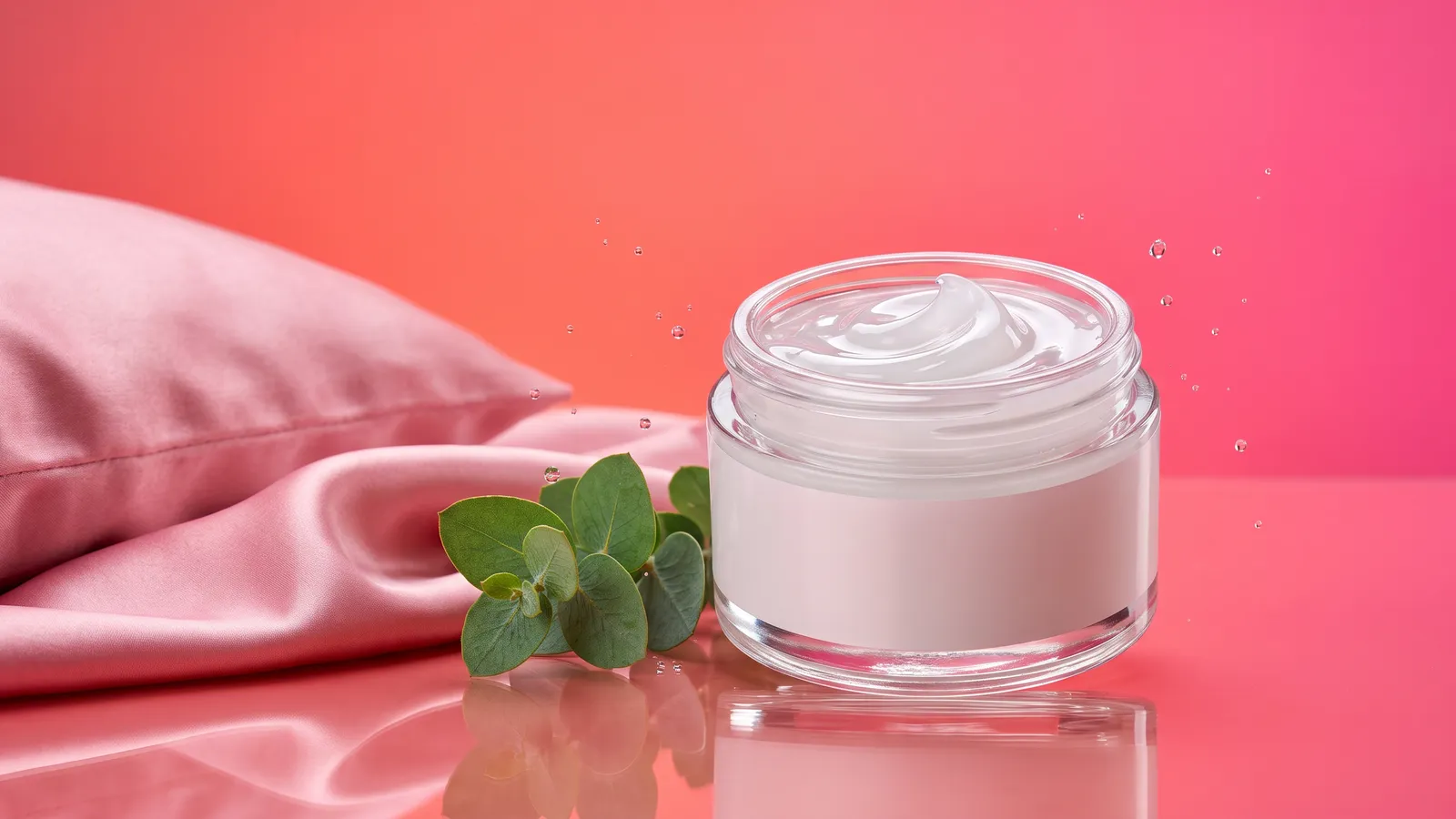
Does slugging work? For the people it's made for, yes, and it takes about a minute. Slugging means sealing your face with an occlusive, usually petroleum jelly, as the very last step of your night routine. It got its name from the glossy, snail-trail finish.
Products that help
Details ↓- Check price on Amazon
Affiliate link: we may earn a commission at no extra cost to you.
- Check price on Amazon
Affiliate link: we may earn a commission at no extra cost to you.
- Check price on Amazon
Affiliate link: we may earn a commission at no extra cost to you.
How slugging works
Skin loses a little water all day and night. Petroleum jelly doesn't add moisture itself; it sits on top and slows that loss. Cleveland Clinic dermatologist Dr. Amy Kassouf describes it as "a simple and very occlusive ointment" that keeps water from evaporating, so the moisture already in your skin has time to soak in and soften it.
That's why it works best when you put it over a moisturizer, not on bare skin. Think of the moisturizer as the water and the jelly as the lid.
Who should try slugging
Slugging suits dry, dehydrated skin, and skin whose barrier feels rough or stingy. Kassouf says it's more likely to help in dry winter months and less needed when the air is humid, which makes now a good time to try it.
It's also handy in small doses. You can dab it only on the thin, dry spots, such as eyelids and lips, and skip the rest of your face.
Does slugging clog pores or cause acne?
It can. Kassouf says oily skin already has "an adequate or even too-robust lipid layer," so there's little to gain, and for acne-prone skin slugging could make breakouts worse. If you're oily, a lightweight gel moisturizer will likely do more for you. Our guide on why your face is so oily covers that side.
Skip slugging on infected skin or open wounds too. Kassouf warns it "may not allow the infection to clear."
How to slug your skin
- Start with clean skin. Cleveland Clinic says slugging should only be done on clean skin, so wash first. Our face-washing guide walks through it.
- Moisturize. Use a plain, fragrance-free cream.
- Leave out the strong stuff. Kassouf advises skipping AHAs, BHAs and retinoids that night, since they can irritate when trapped under the jelly.
- Use very little. A thin, even layer is enough. More just means a greasier pillow.
- Wait about 30 minutes before bed. Cleveland Clinic suggests this, plus a towel over your pillowcase and a hair cap to keep jelly off your hair.
- Wash it off in the morning. A gentle foaming cleanser works better than a drying soap if your skin is sensitive.
How often should you slug?
There's no fixed schedule. Cleveland Clinic's advice is that you may need a few nights in a row if your skin is very dry, but it "rarely should this be an every night routine." Our suggestion: start with one or two nights a week and add more only if your skin asks for it. If redness or irritation shows up, stop and see a dermatologist.
What we'd buy for slugging
You don't need a special product. Kassouf names pure petroleum jelly and low-ingredient ointments such as Aquaphor and CeraVe as good options.
Vaseline Original Healing Jelly
Best for: the simplest, plain petroleum jelly.
- Pure petrolatum, the same kind of product Cleveland Clinic names for slugging.
- A tub goes a long way, since you only need a thin layer.
Aquaphor Healing Ointment
Best for: people who find straight petroleum jelly too heavy.
- Named by Cleveland Clinic as a low-ingredient option for slugging.
- Our take: a softer ointment feel, if plain jelly seems stiff.
CeraVe Healing Ointment
Best for: a petrolatum-based ointment from a skin-barrier-focused brand.
- Also named by Cleveland Clinic as a low-ingredient option.
- Pairs well with a ceramide cream underneath. See our fragrance-free moisturizers for dry skin.
If your skin feels tight even with a good routine, our skin barrier guide is the next stop. For dry skin below the neck, see how to fix dry skin on your body.
FAQs
Does slugging work for oily skin?
Usually not. Oily skin already makes plenty of its own oils, and Dr. Kassouf says slugging can make acne-prone skin worse. A light gel moisturizer is the safer choice.
Does slugging clog pores?
It can in people who are prone to breakouts. Petroleum jelly is a thick seal, and if your skin already breaks out, it can trap oil and product underneath it. Test a small area for a few nights first.
Does slugging cause acne?
For acne-prone skin, it may. Cleveland Clinic says slugging could worsen breakouts. If you notice new bumps after slugging, stop and go back to your regular moisturizer.
How often should you slug?
Rarely every night. Start with once or twice a week, and add nights only if your skin stays dry. Cleveland Clinic says it "rarely should this be an every night routine."
Can I slug over retinol or acids?
It's best not to. Kassouf says to skip AHAs, BHAs and retinoids on slugging nights because they can irritate when sealed under the jelly.
Should I slug on damp or dry skin?
Put it over moisturizer on clean skin. Cleveland Clinic's steps call for cleansing and moisturizing first, then a thin layer of jelly.
Can I slug just part of my face?
Yes. You can limit it to dry areas like eyelids and lips, per Cleveland Clinic.
Slugging works when you match it to dry skin, use a thin layer and keep it to a couple of nights a week.