Dry, tight, flaky skin on your legs, arms and back usually comes down to two things: water and air pulling moisture out, and not enough put back in. The good news is the fix is mostly habits, plus a few drugstore products. If you've been hunting for the best body shower gel for dry skin, it helps, but what you do in the five minutes after the shower matters just as much.
Products that help
See all 5 picks ↓- Check price on Amazon
Affiliate link: we may earn a commission at no extra cost to you.
- Check price on Amazon
Affiliate link: we may earn a commission at no extra cost to you.
- Check price on Amazon
Affiliate link: we may earn a commission at no extra cost to you.
- Check price on Amazon
Affiliate link: we may earn a commission at no extra cost to you.
Why is the skin on my body so dry?
Dry skin happens when there isn't enough moisture in the outer layers of your skin. Cleveland Clinic lists the usual reasons:
- Age. "As you age, your skin's moisture-producing oil glands dry up."
- Climate. Dry or cold, windy weather dries skin out, and it's "often worse during the winter."
- Hot, frequent washing. Washing too often, or "using water that's too hot," can lead to dry skin.
- Genes and health. Some people are simply prone to it, and some conditions, such as eczema, diabetes and kidney disease, list dry skin as a symptom.
Your shins, arms and hands usually go first, because they have fewer oil glands and get the most exposure.
How to fix dry skin on your body: 8 steps
1. Keep showers short and warm, not hot
The American Academy of Dermatology (AAD) says to "limit baths and showers to five to ten minutes, using warm water." A short warm shower can actually add moisture. It's the long, hot one that strips it. The AAD also suggests closing the bathroom door so the steam stays in.
2. Use a gentle wash, and only where you need it
Dry skin doesn't need a mountain of foam. The AAD's advice is to use enough cleanser "to remove dirt and oil but avoid using so much that you see a thick lather," and to use it "only where you need it, such as your armpits or groin area." Your shins and forearms often only need a rinse. Skip deodorant soaps, which the AAD calls "too harsh for dry, sensitive skin."
3. Pat dry, don't rub
Rubbing with a towel drags across skin that's already rough. The AAD says to "gently pat your skin with a clean, dry towel." Leave your skin a little damp. That's the point of the next step.
4. Moisturize right away, while skin is still damp
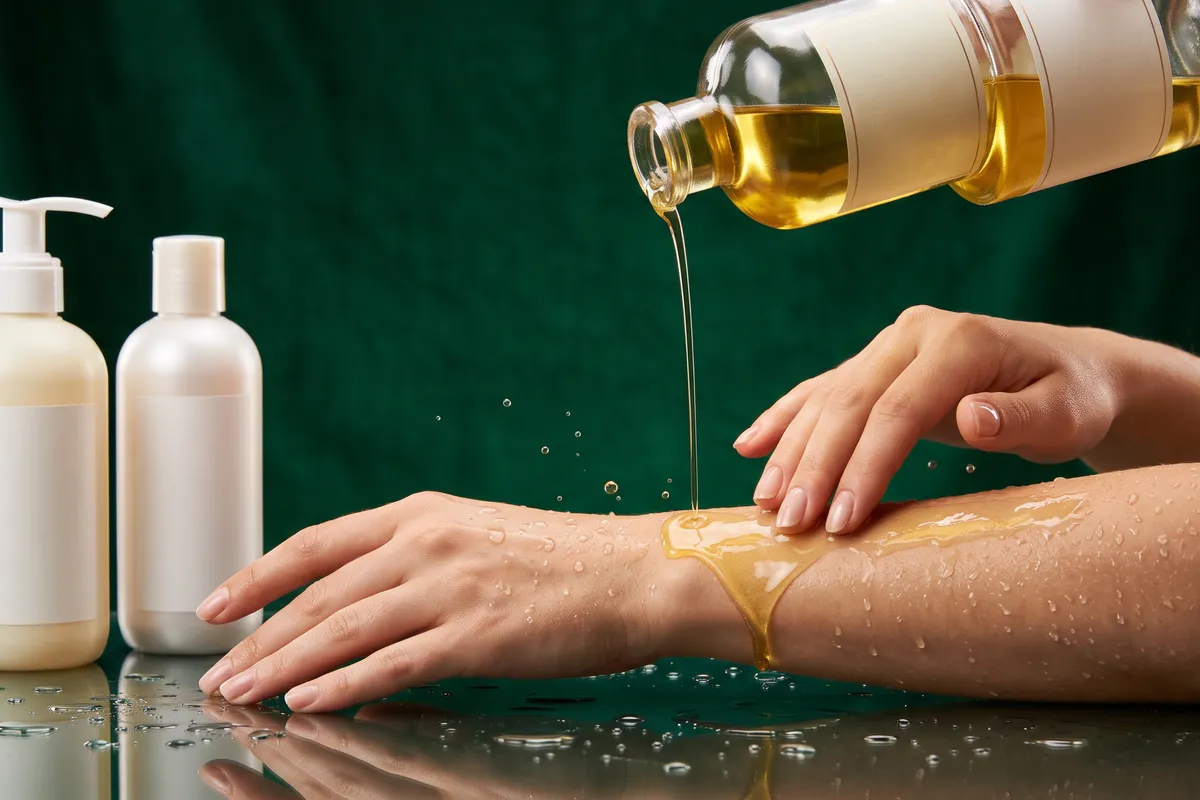
This is the step that makes the biggest difference. The AAD says to apply moisturizer "when your skin is still damp after taking a shower or bath," and to pat dry "and immediately apply your fragrance-free moisturizer." Damp skin holds on to that water when you seal it in with oil or cream. Take a minute to massage it in.
5. Choose a cream over a thin lotion when it's bad
According to the AAD, "ointments and creams add more moisture to skin and are more effective than lotions." Look for ingredients the AAD names, such as glycerin, hyaluronic acid, shea butter, dimethicone, petrolatum, mineral oil or jojoba oil. A light lotion is fine for most days. On cracked-feeling shins in January, go thicker.
6. Go fragrance-free if your skin stings
The AAD says "dermatologists recommend using products labeled 'fragrance-free,'" and warns that "unscented" isn't the same thing: it can mean added chemicals that mask other smells. If your body lotion stings, or your skin itches after a scented wash, switch to fragrance-free versions first.
7. Run a humidifier while you sleep
Heated indoor air is dry. The AAD suggests a humidifier: "place it in your bedroom and run it while you sleep," and clean it regularly so mold can't grow.
8. Wear soft, loose cotton
Tight leggings and jeans rub, and the AAD says wool or polyester against your skin "can also irritate dry, sensitive skin." Wear loose cotton, or a cotton or silk layer under scratchy sweaters.
The best body shower gel for dry skin: what to look for
The best body shower gel for dry skin is a creamy, sulfate-free wash with moisturizers in it, or a fragrance-free one if your skin is sensitive. Here's what to look for on the label:
- Creamy, not squeaky. Words like "moisturizing," "cream" or "hydrating," and moisturizers such as glycerin, shea butter or plant oils high on the list.
- Fragrance-free if you react. Dermatologist Dr. Brendan Camp told Shop TODAY that sensitive skin does best with cleansers "free of dyes, fragrances, or other potentially irritating ingredients."
- No deodorant or antibacterial soap for everyday use on dry skin.
A body wash only touches your skin for a minute before you rinse it off, so it can't do the job alone. Think of it as "doesn't make things worse." The moisturizer afterwards does most of the work.
Moisturizing body oil vs lotion: which is better?
Neither is better for everyone. A moisturizing body oil is good at sealing in water you already have on your skin, while a cream or lotion adds water and moisturizers of its own. Board-certified dermatologist Dr. Elaine Kung told NBC Select that "body oils absorb better on damp skin," so apply a few drops after showering. Dermatologist Dr. Connie Yang says that if you layer products, oil goes on top of body serums but under "thicker products like lotions, creams and butters."
So, a simple order after the shower: damp skin, then oil, then cream if you need more. Or just one of them. For mature skin that's thin and crepey as well as dry, our best lotion for aging skin roundup has richer options.
What is a dry body oil?
A dry body oil is a light oil that soaks in quickly and leaves a matte finish, not a shine. NBC Select explains that "dry oils absorb more rapidly into the skin and have a matte finish while wet oils leave behind a slight sheen." Dry oils are easier if you want to get dressed fast. Richer "wet" oils suit very dry skin, especially in cold weather.
Picks that help
Dove Deep Moisture Body Wash
Best for: a creamy body wash for dry skin that still smells like something.
- Dove describes it as "a deeply moisturizing body wash for dry skin" and says it's sulfate-free with plant-based moisturizers.
- Board-certified dermatologist Dr. Marisa Garshick told Shop TODAY its moisturizing blend helps "replenish moisture to prevent dryness of the skin," and noted "it is sulfate-free and gentle on the microbiome."
- Keep in mind: it contains fragrance. If scented washes make you itch, pick the Cetaphil below.
Cetaphil Moisturizing Relief Body Wash, Fragrance Free
Best for: a fragrance-free body wash for dry, sensitive skin.
- Cetaphil calls it "a creamy, rich-lather body wash with a blend of shea butter and avocado oil," with sweet almond oil and glycerin in the formula.
- It's labeled fragrance-free, sulfate-free and paraben-free, and the brand says it's for dry, sensitive skin.
- Keep in mind: no independent reviewer we found has covered this exact wash. We picked it on its fragrance-free formula, which matches the AAD's advice.
Neutrogena Body Oil Light Sesame Formula, Fragrance-Free
Best for: a body oil for hydration, smoothed onto damp skin straight after the shower.
- The directions on Neutrogena's amazon.com listing: "While skin is still damp, smooth on a few drops to help seal in moisture." You can also add it to bath water.
- The ingredient list is short: isopropyl myristate, sesame seed oil, an emulsifier and two preservatives. No fragrance is listed.
- Keep in mind: any oil makes the tub or shower floor slippery. Neutrogena's own safety note says to "take special care to avoid slipping."
Aveeno Daily Moisturizing Body Oil Mist
Best for: a dry body oil you can spray on and get dressed.
- Aveeno says the mist, with oat oil and jojoba oil, "nourishes and conditions rough, sensitive, dry skin." Jojoba oil is one of the moisturizing ingredients the AAD lists.
- It's a spray, which makes your back and legs easier to reach. Aveeno says to "spray close to the skin and massage in," and not near your face.
- Keep in mind: it contains fragrance, and soybean oil is the first ingredient.
CeraVe Daily Moisturizing Lotion
Best for: a fragrance-free body moisturizer you'll actually use every day.
- CeraVe describes it as "a lightweight, oil-free moisturizer with three essential ceramides," with hyaluronic acid, and lists dimethicone and petrolatum among its key ingredients.
- It's fragrance-free, and the brand says you can use it on face and body.
- Keep in mind: it's a lotion, and the AAD says creams hold in more moisture. On very dry patches, layer it over a few drops of oil, or see our best fragrance-free moisturizer for dry skin list for richer creams.
FAQs
What are the best body oils for dry skin?
The best body oils for dry skin are ones you'll put on damp skin every day, in a texture you like. A light, fragrance-free oil such as Neutrogena's sesame formula works for most people. Richer oils suit very dry skin in winter, and NBC Select's experts warn that coconut, soybean and flaxseed oil can clog pores if you're breakout-prone.
Is a body oil for hydration enough on its own?
A body oil for hydration can be enough on mildly dry skin if you apply it to damp skin, because it seals in the water from your shower. If your skin still feels tight an hour later, add a cream on top. Oil goes under thicker products, according to Dr. Yang.
How do you use a moisturising oil for body?
Use a moisturising oil for body straight after a shower, on skin that's still damp: a few drops per limb, massaged in. Give it a few minutes before you dress. NBC Select notes most oils need that time to avoid marking clothes.
What's a good body moisturizer that's fragrance free?
A good body moisturizer that's fragrance free says "fragrance-free" on the label, not just "unscented." CeraVe Daily Moisturizing Lotion is an easy daily pick, and our fragrance-free moisturizer roundup has thicker creams for face and body.
Is it bad to shower every day if you have dry skin?
No, a daily shower is fine if it's short and warm. The AAD's limit is five to ten minutes. The damage comes from long, hot showers and harsh soap, not from showering itself.
Why is my skin still dry even though I use lotion?
Usually it's the timing or the texture. Lotion on fully dry skin, hours after a hot shower, doesn't do much. Try moisturizing within a few minutes of patting dry, switch to a cream, and run a humidifier at night. If nothing changes after a few weeks, see a dermatologist.
Short warm showers, a gentle wash, and oil or cream on damp skin every single time: that's most of the fix for dry skin on your body.