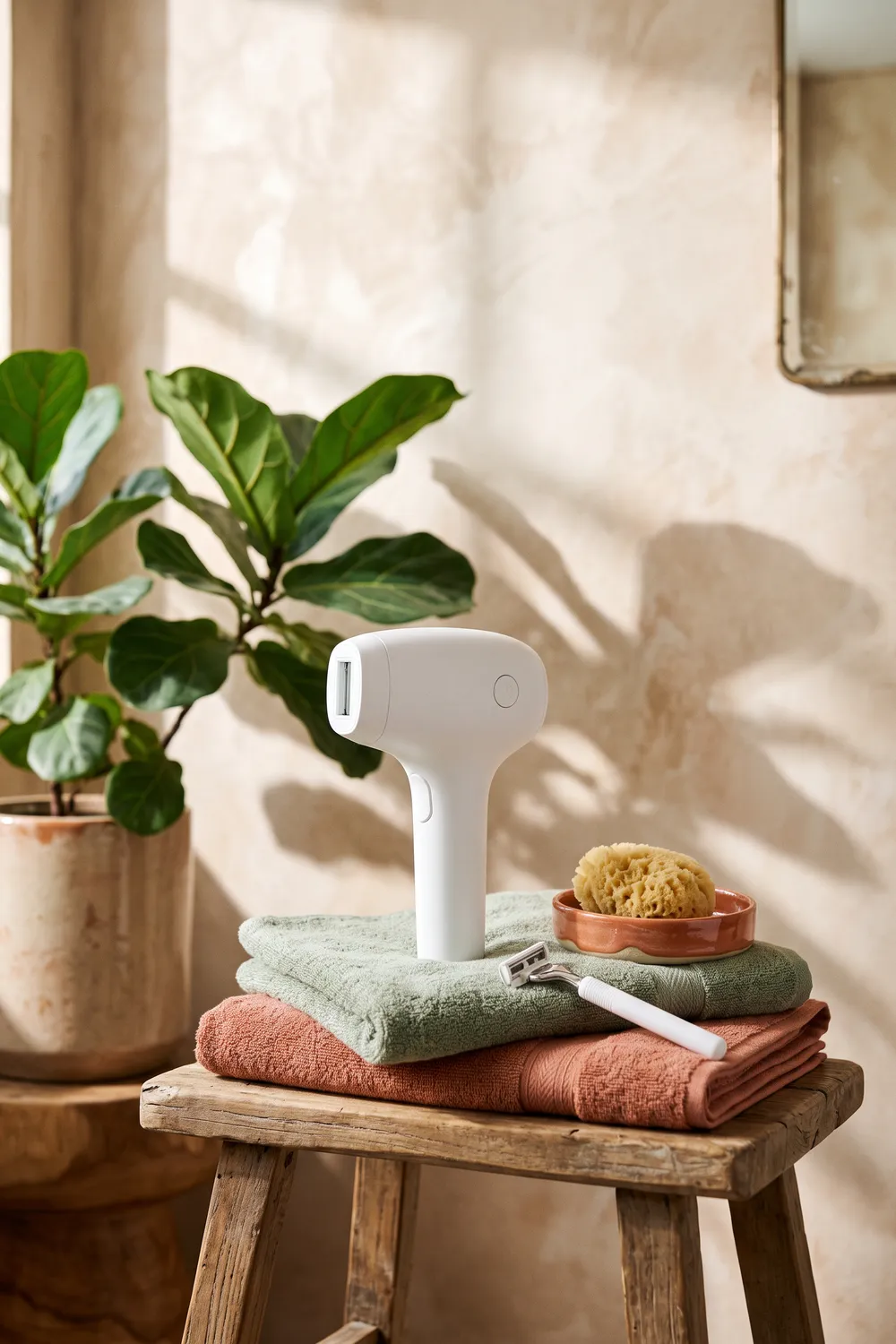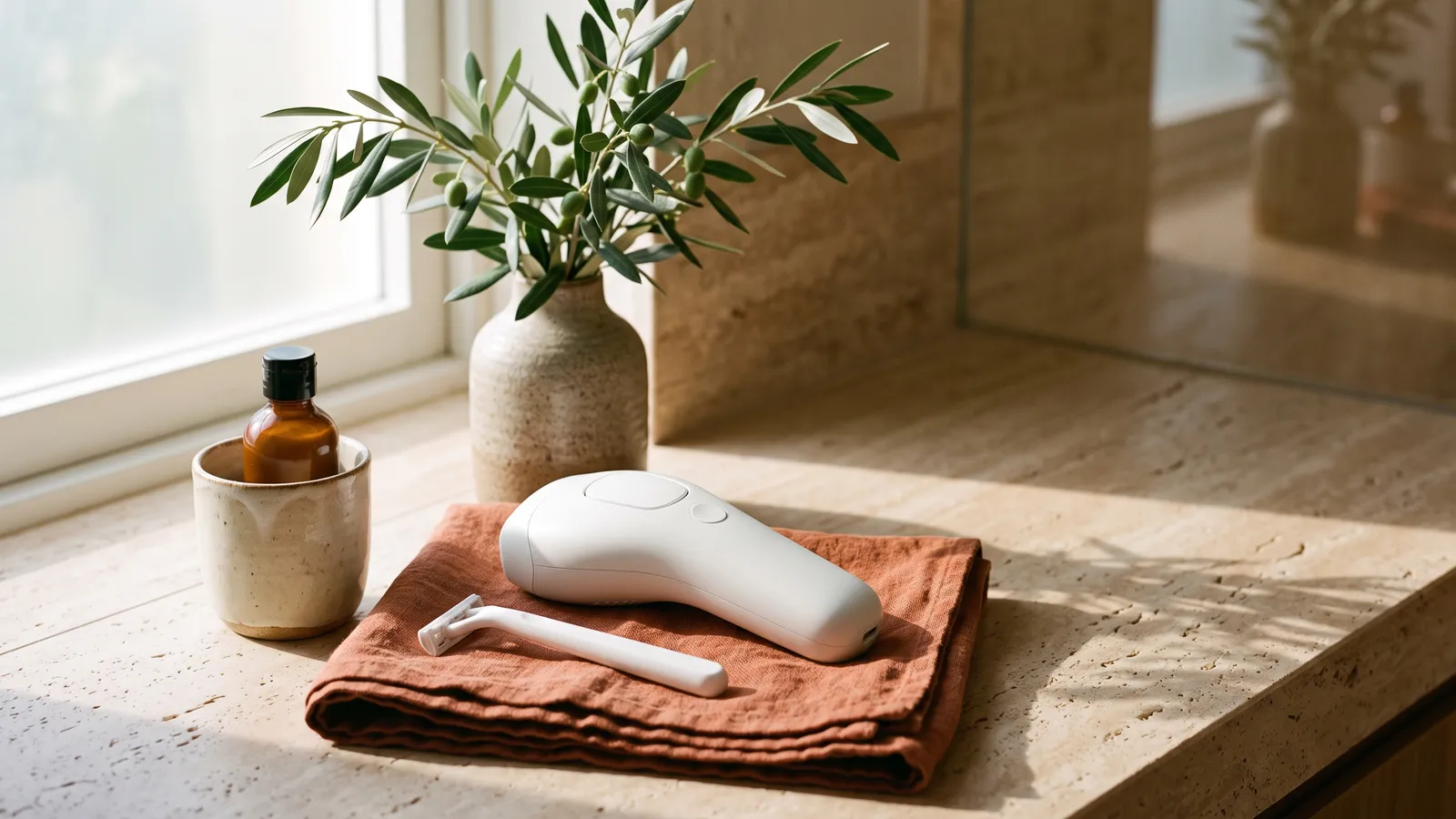
If you're tired of shaving every other day, or of the bumps and dark dots that come with it, at-home laser hair removal is tempting. The honest answer is that a hair reduction laser machine for home use does what the name says: it reduces hair. Most people end up with less, finer regrowth and shave far less often. Some people shouldn't use one at all, and the rest need patience.
Products that help
Details ↓- Check price on Amazon
Affiliate link: we may earn a commission at no extra cost to you.
- Check price on Amazon
Affiliate link: we may earn a commission at no extra cost to you.
- Check price on Amazon
Affiliate link: we may earn a commission at no extra cost to you.
- Check price on Amazon
Affiliate link: we may earn a commission at no extra cost to you.
How IPL laser hair removal works
Light is aimed at the pigment (melanin) in the hair. The hair absorbs it, heats up, and the follicle slows down. Braun describes its IPL as concentrating light "into the hair follicle, heating it up and disabling hair regrowth."
That's also why skin and hair color matter so much. In Braun's words, "the colour contrast between the hair and skin helps the IPL device to pick up on those melanin pigments." Dark hair on lighter skin gives the device a clear target. Ulike explains the flip side: IPL "cannot differentiate between the melanin in the hair follicles and that in the skin," so darker skin "can absorb higher energy levels."
IPL vs. laser: is it the same thing?
Not quite. Clinics use medical lasers. Almost every home device sold as "laser hair removal," including all three IPL picks below, is IPL: a broad flash of light rather than a single laser beam. Both target pigment, which is why the same skin-and-hair rules apply to both.
Who at-home IPL is for (and who it isn't)
Good candidates: light to medium skin with brown, dark blonde, dark brown or black hair. Braun says its IPL works on those hair colors.
Not a match:
- Red, gray, white or very blonde hair. Braun says IPL "won't be effective at all" on very blonde, red or white hair, because there isn't enough melanin to absorb the light.
- Very dark skin. Braun says its Pro 5 is suitable up to Type 5 (dark brown) skin, but "like any other IPL device, not suited for type 6 (dark brown to black) skin tones." Using IPL on skin that's too dark can cause discoloration and, Braun warns, "in severe cases, it could result in painful burns or blisters."
- Tattooed skin, and skin that's freshly tanned. Ulike's listing says the Air 10 is "not suitable for tattooed, over-tanned, or light-sensitive skin."
Every brand publishes its own skin-tone and hair-color chart. Check it for the exact device you're buying, because the limits aren't identical between brands. Both brands here have a built-in skin sensor that adjusts or stops the flash on skin that's too dark, but think of that as a backup, not permission to skip the chart.
If IPL isn't a match, an in-office laser may still be. The American Academy of Dermatology (AAD) says that today, laser hair removal "is a treatment option for patients who have light-colored hair and light skin and patients who have dark skin," but it "must be performed very carefully in these patients."
How to use an at-home IPL device: 6 steps
1. Check the chart, then patch test
Find your skin tone and hair color on the brand's chart. Then flash one small spot on the lowest setting and wait a day or two before treating a bigger area. Braun recommends "doing a patch test before use."
2. Shave first (don't wax)
Shave the area a few hours before, or the night before. Ulike says to shave any hair longer than 2 mm, and that skipping it can cause "a burning smell during treatment, as the IPL light burns surface hair instead of reaching the follicles." Use shaving only. Waxing, epilating and plucking pull out the root the light needs to reach. If shaving leaves you with dark dots or bumps, our strawberry legs guide helps with that while you wait for results.
3. Start on a low setting and cover the area in rows
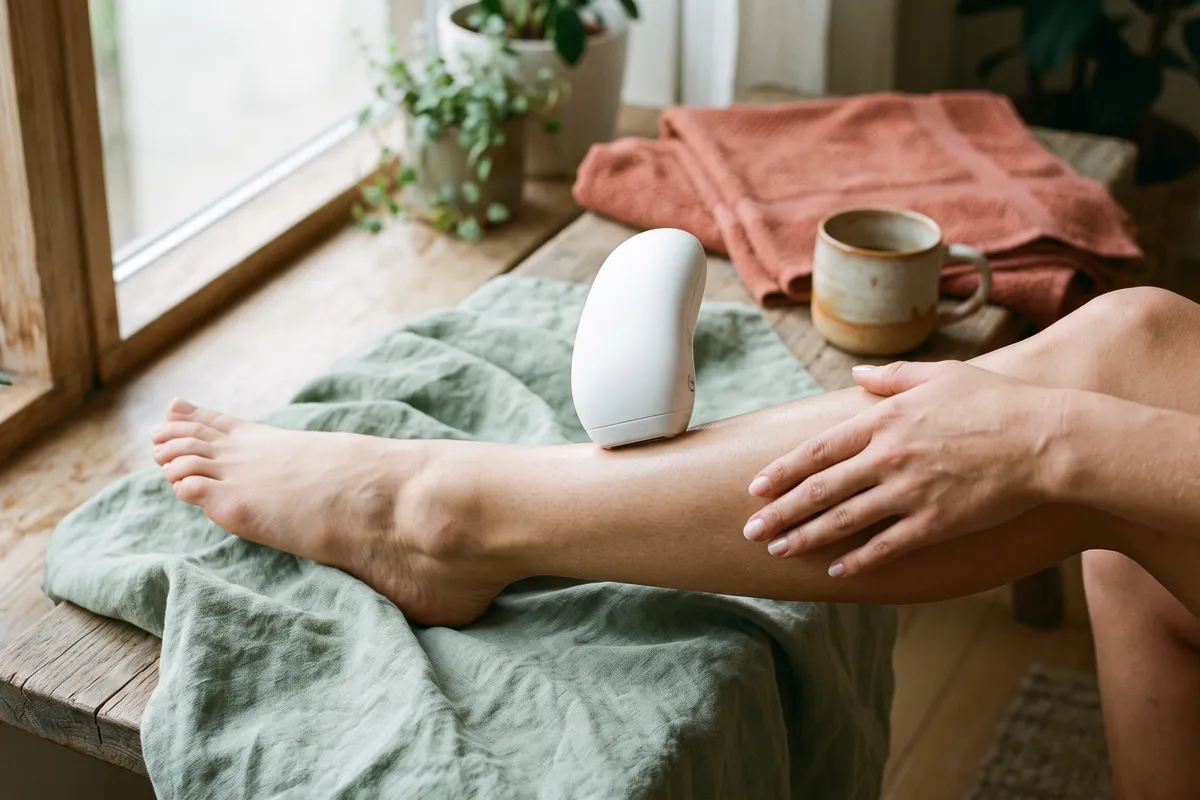
Clean, dry skin, no lotion or deodorant on the area. Work in rows, placing the window flat against the skin so you don't leave gaps. Braun and Ulike both say a full-body session takes about 10 minutes once you have the hang of it.
4. Stick to the schedule (this is where most people give up)
Hair grows in cycles, and only hair in its growing phase responds to light. Braun says the hair growth cycle "could take up to 18-24 months, depending on body area," which is why one session never does it. The brands' schedules:
- Braun: once a week for 4 to 12 weeks, then every one to two months.
- Ulike: every other day for the first four weeks, then "maintenance sessions once or twice a month." Ulike says treating the same area every day "offers no additional benefits."
Don't expect much in week one. The AAD says that even with in-office lasers, you can expect "a 10% to 25% reduction in hair after the first treatment." It adds up.
5. Keep it away from your eyes
Braun says its device is safe on the face "below the cheekbones" and "shouldn't be used near the eyes and along the forehead." Never flash near your eyes or eyebrows, and never look into the window. Some devices have UV filters and say no glasses are needed, but that's no reason to aim one at your face carelessly.
6. Look after your skin afterwards
Skip anything that might irritate the area for a day. Braun lists hot tubs, saunas, tight clothing, bleaching creams, "perfumed products or peeling products" for 24 hours after treatment. Wear sunscreen on treated skin and stay away from tanning beds. If your legs feel dry after shaving and flashing, a fragrance-free lotion helps; see our guide on how to fix dry skin on your body.
Does it last? What "hair reduction" really means
Hair reduction means less hair, finer hair and slower regrowth, not zero hair forever. The AAD says that after a course of in-office laser treatments, most people stay hair-free "for months or even years," and when hair does regrow, "there tends to be less of it. The hairs also tend to be finer and lighter in color." Even then, "a patient may need maintenance laser treatments." Home IPL follows the same pattern, so plan on keeping the device and using it every few weeks.
Professional laser hair removal machine vs. at-home IPL
A professional laser hair removal machine is a medical laser used in a clinic. The AAD recommends having it done by "a board-certified dermatologist," and it doesn't mince words about the risk: "Laser hair removal can be dangerous in inexperienced hands." It lists burns, scars and lasting changes in skin color among the possible results. Most patients need two to six treatments, usually four to six weeks apart.
At home, you trade speed for convenience and privacy. Our take: if your skin and hair are a good match and you'll actually stick with the schedule, an IPL device is worth it. If your skin is very dark, your hair is light, or you want the fastest result, book a consultation with a dermatologist instead.
Picks that help
Ulike Air 10 IPL Hair Removal Device
Best for: quicker full-body sessions and coarse hair.
- Ulike says the Air 10 has "Dual Lights" covering an "18% wider treatment area," sapphire ice-cooling for comfort, and a SkinSensor that "detects skin tones, auto-adjusts power, and stops flashing" on skin that's too dark.
- This bundle includes a long-handle razor for shaving before sessions. Modes include fast, normal, high and USHR for stubborn hair.
- Keep in mind: Ulike says it's not for tattooed, over-tanned or light-sensitive skin. Check Ulike's skin-tone chart before you buy.
Braun Silk-expert Pro 5 IPL
Best for: medium to darker skin tones up to Type 5.
- Braun says its SensoAdapt sensor "automatically adjusts each flash," and its skin-tone guide says the Pro 5 is suitable for skin up to Type 5 (dark brown). It's not for Type 6.
- This version comes with a standard head and a precision head for smaller areas, plus a pouch and a razor.
- Keep in mind: it's still IPL, so it won't work on red, gray, white or very blonde hair. Braun's schedule is weekly for 4 to 12 weeks.
Braun Silk-expert Mini IPL
Best for: underarms, bikini line and upper lip.
- A smaller IPL device. Braun's listing says it has a skin-tone sensor that "reads your skin tone and automatically adjusts each flash."
- Braun says to use it "2 sessions per month, for 3 months," following its regimen.
- Keep in mind: a smaller window means legs take longer. If you mainly want to do your legs, a full-size device is less tedious.
Braun Silk-épil 9 Epilator
Best for: light blonde, red, gray or white hair, or skin that's too dark for IPL.
- An epilator pulls hair from the root, so hair color doesn't matter. Braun's skin-tone guide suggests an epilator for light blonde, red or white hair.
- It's wet and dry, so you can use it in the shower, and comes with a shaver head, trimmer comb and body trimmer. Braun says it catches "shorter hairs (0.5mm) that wax can't."
- Keep in mind: it stings, especially the first few times. Don't epilate an area you're also treating with IPL.
FAQs
Is IPL laser hair removal safe at home?
IPL laser hair removal is generally safe at home if your skin and hair are on the brand's chart and you follow the instructions. The risks are burns and color changes on skin that's too dark, plus eye exposure, so patch test, keep it away from your eyes, and don't use it on tattoos.
How long does at-home laser hair removal take to work?
Most people see less regrowth within a few weeks, with the full effect after about 12 weeks of regular sessions. Braun's start-up phase is 4 to 12 weekly treatments; Ulike's is every other day for four weeks, then maintenance.
Does at-home laser hair removal hurt?
Most people describe it as a warm snap or flick on the skin. Lower settings and cooling devices are more comfortable. Bony areas and the bikini line tend to feel it most.
Can I use an IPL device on my face?
Only below the cheekbones, according to Braun: upper lip, chin and jawline are fine on most devices, but never near the eyes or along the forehead. Check your device's manual.
Is there a professional laser hair removal machine I can buy for home?
Not in the clinic sense. A professional laser hair removal machine is a medical device that the AAD says should be used by a skilled doctor. Home devices are IPL designed for home use, with built-in skin sensors.
Will the hair come back?
Some will. Both in-office lasers and home IPL reduce regrowth, and the AAD says maintenance treatments are often needed. That's why it helps to keep your device and do a top-up session every few weeks.
Match your skin and hair to the chart, shave, patch test, and stick to the schedule. That's what makes at-home IPL work.