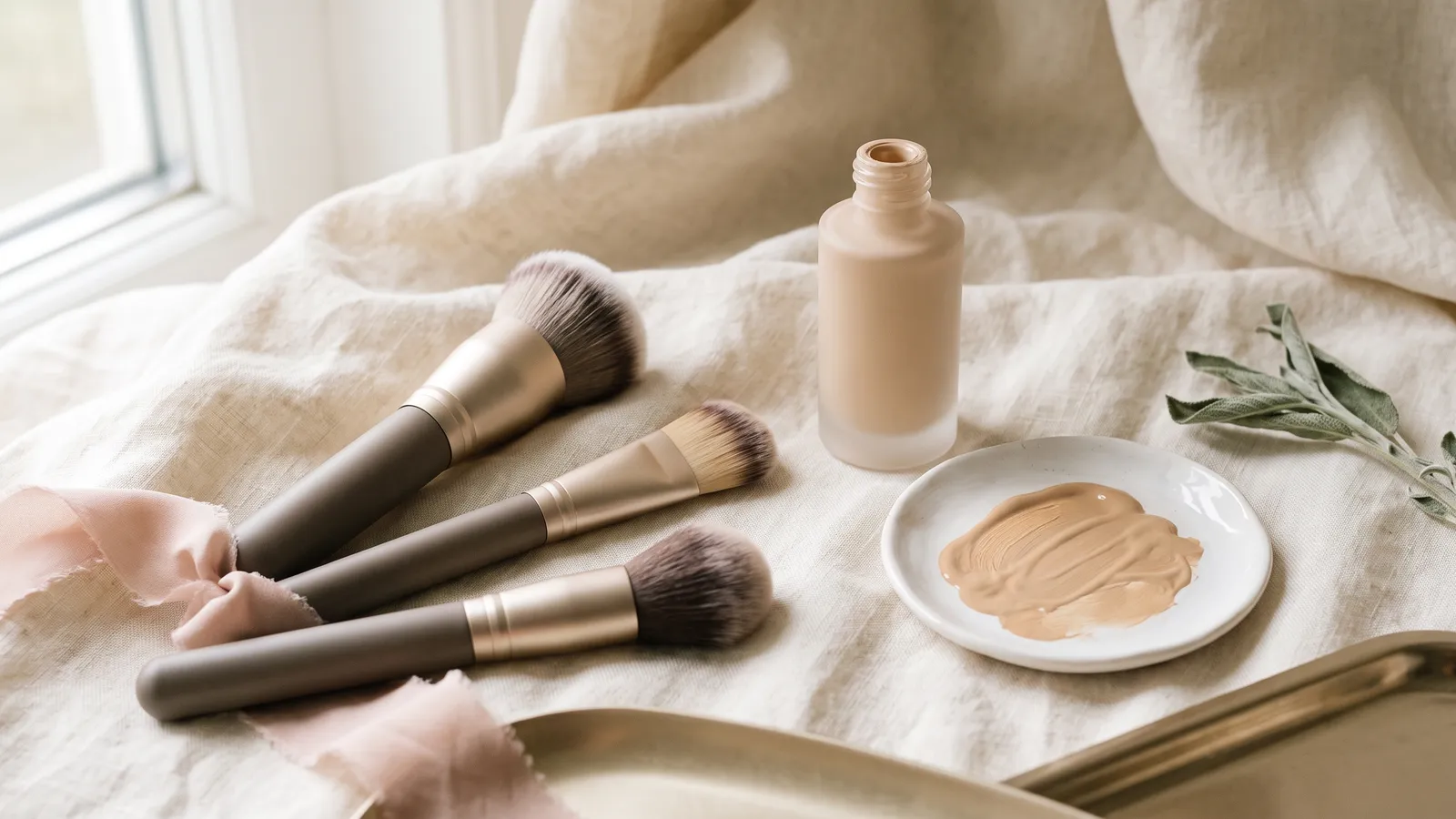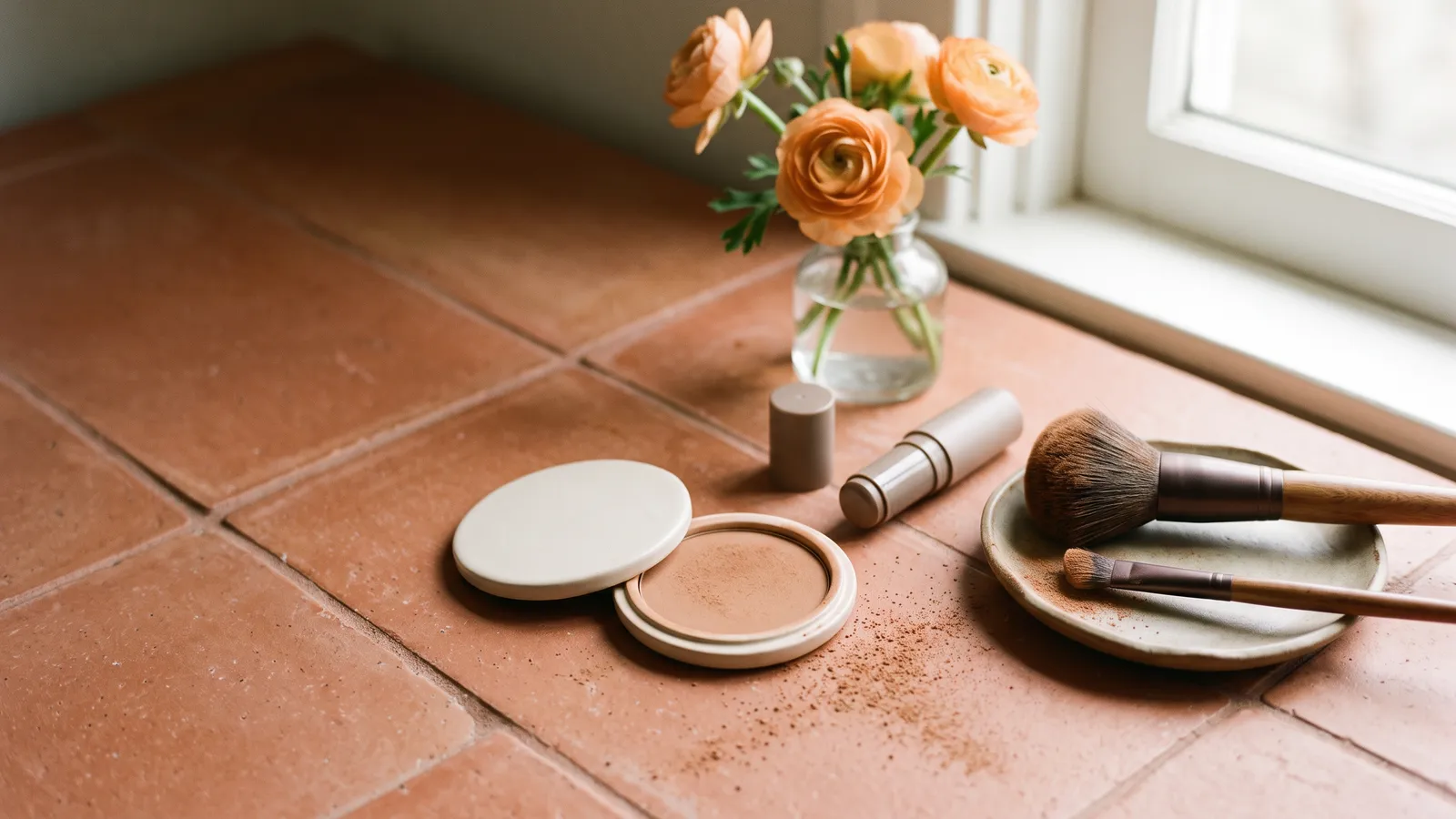
They sit next to each other at the store, they're both brown, and some products are even sold as "contour bronzer." So it's no surprise people use them interchangeably. Here's how to tell them apart, which one you need, and how to stop either turning orange or muddy.
Products that help
Details ↓- Check price on Amazon
Affiliate link: we may earn a commission at no extra cost to you.
- Check price on Amazon
Affiliate link: we may earn a commission at no extra cost to you.
- Check price on Amazon
Affiliate link: we may earn a commission at no extra cost to you.
- Check price on Amazon
Affiliate link: we may earn a commission at no extra cost to you.
What is bronzer?
Bronzer is a warm-toned powder, cream or liquid that makes skin look like it's caught some sun. Makeup artist Nick Lujan told Marie Claire that bronzers are "always sheer," with a warmer undertone (yellow, golden, peach or orange), and are used to "warm the complexion and add radiance."
Bronzer can be matte or shimmery. For everyday wear on most skin, a matte bronzing powder looks the most like real skin, and it's the easiest to build up slowly.
What is contour?
Contour is a cool-toned, matte shade that copies a natural shadow. Lujan says contour shades should have a cooler undertone, greige or red, and "a matte/light-absorbing finish to help push features back." Charlotte Tilbury says contour products "are usually cool toned to mimic the appearance of natural shade on your face."
Shadows aren't orange. That's the whole reason a warm bronzer looks odd when you use it to contour.
Is bronzer and contour the same thing?
No. They overlap, but they do different jobs.
| Bronzer | Contour | |
|---|---|---|
| Purpose | Warmth, a sun-kissed look | Shape, a fake shadow |
| Undertone | Warm: golden, peach, red-brown | Cool or neutral: taupe, grey-brown |
| Finish | Matte or a soft glow | Always matte |
| Where | Where the sun hits | Where shadows fall |
| Brush | Big and fluffy | Small, dense, angled |
| Shade | Warmer than your skin | One to two shades darker than your skin, e.l.f. says |
A few products are made to do a bit of both. They're fine for a quick, soft look. For real definition, you need a true contour shade.
Which one do you need?
- You want to look rested and like you've been outside: bronzer.
- You want cheekbones or a sharper jaw: contour.
- Your face looks flat in photos: a little of both, contour first.
- You wear very little makeup: bronzer alone is the easier win. Contour takes more blending to look natural.
How to bronze: 4 steps
1. Pick a shade that's warm but not orange
Lujan says "bronzers should be warmer on all skin tones." Warm doesn't mean orange, though. On fair skin, pick a soft, light golden-tan. On medium or olive skin, golden or caramel. On deep skin, rich red-brown or mahogany shades show up best and won't go ashy. If it looks orange on your jaw in daylight, it's too warm or too dark.
2. Use a big, fluffy brush and tap off the excess
e.l.f. says to "pat any excess product off of the brush before applying" powder bronzer. Most bronzer mistakes come from a loaded brush hitting the cheek first. Start with less than you think you need.
3. Draw a "3" on each side
e.l.f.'s "#3 method": start on your forehead above your temple, sweep down onto your cheekbone, and finish along your jaw, so it makes a number 3 on the side of your face. Then "softly blend the bronzer up and out." Charlotte Tilbury adds the bridge of your nose and your neck, which stops your face looking a different color from the rest of you.
4. Blend it into your neck
Take whatever's left on the brush down your jaw onto your neck. A hard line at the jaw is the usual giveaway.
How to contour without stripes
1. Find your own shadows first
Lujan's tip: look at your face in dim light with one light source and "study how the shadows naturally form as you tilt your face at different angles." That's where contour goes. He lists the "typical places to sculpt" as "the hairline, the hollows of the cheek, the crease of the eye, the sides and tip of the nose, under the chin and under the jaw line."
2. Choose a cool shade one to two shades darker
e.l.f. suggests a contour "one to two shades darker than your skin tone." Lujan says contour shades "do change based on skin tone," so match it to your own shadows rather than a standard color. On deep skin, a contour that's too light or too grey can look ashy; go deeper rather than greyer.
3. Place it high and blend up
Put contour just under the cheekbone, not in the middle of the hollow, and blend upward toward your ear. Dragging it down makes your face look tired.
4. Use a small, dense brush or stipple
e.l.f.'s tip for avoiding a muddy contour: blend "with gentle stippling motions for a smooth, seamless finish." Pressing and bouncing a dense brush spreads the edge without moving your foundation around.
Bronzer contour: how to use both
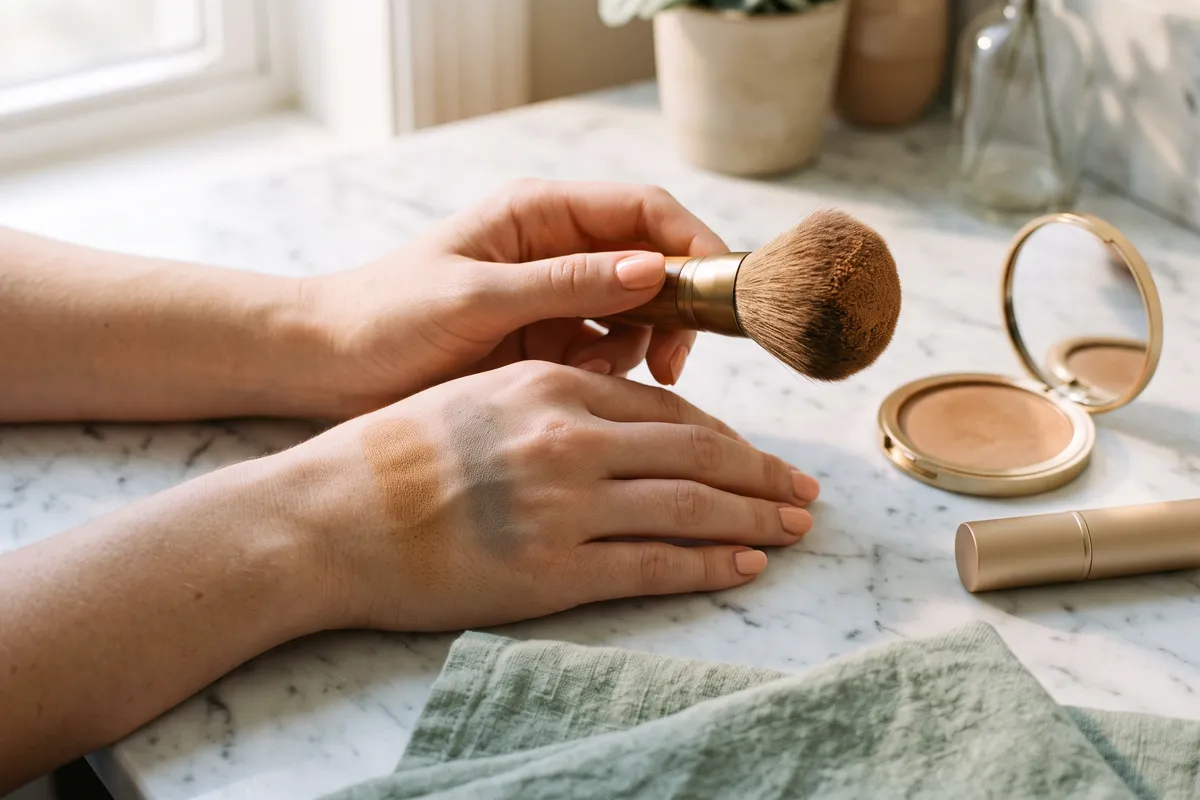
Contour first, then bronzer. Cream contour goes on after foundation (e.l.f. recommends after, though you can put it under to "underpaint"). Blend it until there's no line. Set your face with a light dusting of powder (our guide to setting makeup with powder covers how much), then sweep powder bronzer lightly over the top and across the high points. If your bronzer is a cream, put it on with the contour, before the powder.
Creams under powders, never powders under creams. Putting a cream contour over a powdered face is the fastest route to patches.
Why bronzer and contour look muddy
- One shade doing both jobs. A warm bronzer in the hollows looks dirty, not shadowed.
- Shimmer in the contour. Shine pulls the area forward, the opposite of a shadow.
- Too much on the brush. Tap off, build slowly.
- Cream over powder. It drags and goes patchy.
- The wrong brush. A huge fluffy brush for contour spreads it everywhere. A tiny dense brush for bronzer makes stripes.
- Shade too dark for your skin. If it reads as a stripe from arm's length, go a shade lighter.
Picks that help
Physicians Formula Matte Monoi Butter Bronzer
Best for: a pressed powder bronzer that stays matte.
- Physicians Formula calls it a "water-resistant matte bronzer" with "an airbrushed matte finish," made with monoi, murumuru, cupuaçu and tucuma butters.
- The brand describes the texture as one that "combines the best features of a powder and cream bronzer."
- Shades on Physicians Formula's site: Matte Light Bronzer, Matte Sunkissed Bronzer, Matte Bronzer and Matte Deep Bronzer.
e.l.f. Halo Glow Contour Beauty Wand
Best for: beginners who want a liquid contour that's hard to overdo.
- A cushion-tip wand you dot on the "hairline, temples, sides of your nose, hollows of your cheeks, and jawline," then blend, per e.l.f. The listing says it won Allure Best of Beauty 2023.
- e.l.f. says it comes in a range of shades "for fair to rich skin tones," and lists five on its site.
- Keep in mind: e.l.f. describes "a glint of radiance." If you want a fully flat shadow, set it with a matte powder.
Real Techniques Cheek Hugging Contour Brush
Best for: blending cream or liquid contour without stripes.
- Real Techniques says the sloped, angled head "hugs the curves of your face to sculpt, bronze and define."
- It's made for "cream contour, liquid bronzer, contour stick or other cream-based face makeup," with UltraPlush synthetic bristles.
- Keep in mind: it's a cream brush. For powder contour, a small fluffy angled brush works better.
Real Techniques Mini Multitask Brush
Best for: sweeping on powder bronzer, at home or in a travel bag.
- Real Techniques describes "plush, tapered bristles for soft focus application," for "powder blush, bronzer, or setting powder."
- It has a full-sized head on a short handle, so it's easy to pack.
- Keep in mind: if you want a whole set of face brushes instead, see our makeup brush set picks.
FAQs
What's the difference between contour and bronzer?
Bronzer warms your face where the sun would hit it. Contour adds a cool, matte shadow where your face naturally dips. Bronzer is about color; contour is about shape.
Is contour and bronzer the same?
No. Contour is cooler and always matte, and bronzer is warmer and can have some glow. You can use a soft, neutral bronzer to lightly contour in a pinch, but it won't look as much like a real shadow.
Should bronzer be lighter or darker than contour?
Usually a bit lighter and warmer. Contour is meant to look like a shadow, so it's the deeper, cooler shade. Bronzer just adds warmth, so it can be closer to your skin tone.
Do I apply bronzer or contour first?
Contour first, then bronzer. That's the order most guides suggest. Cream products go on before any powder, and powder bronzer goes on last before your setting spray.
What's the best contour brush?
A small, dense, angled brush for creams, like Real Techniques' Cheek Hugging Contour Brush. For powder, a smaller fluffy angled brush. Either way, it should be smaller than your bronzer brush.
What is pressed powder bronzer best for?
Everyday wear and oily skin, because it's easy to sheer out and sets matte. Cream bronzers can look more natural on dry or mature skin, since powder can sit on texture.
Bronzer for warmth, contour for shadow, and a light hand with both: that's most of the difference between bronzer and contour.