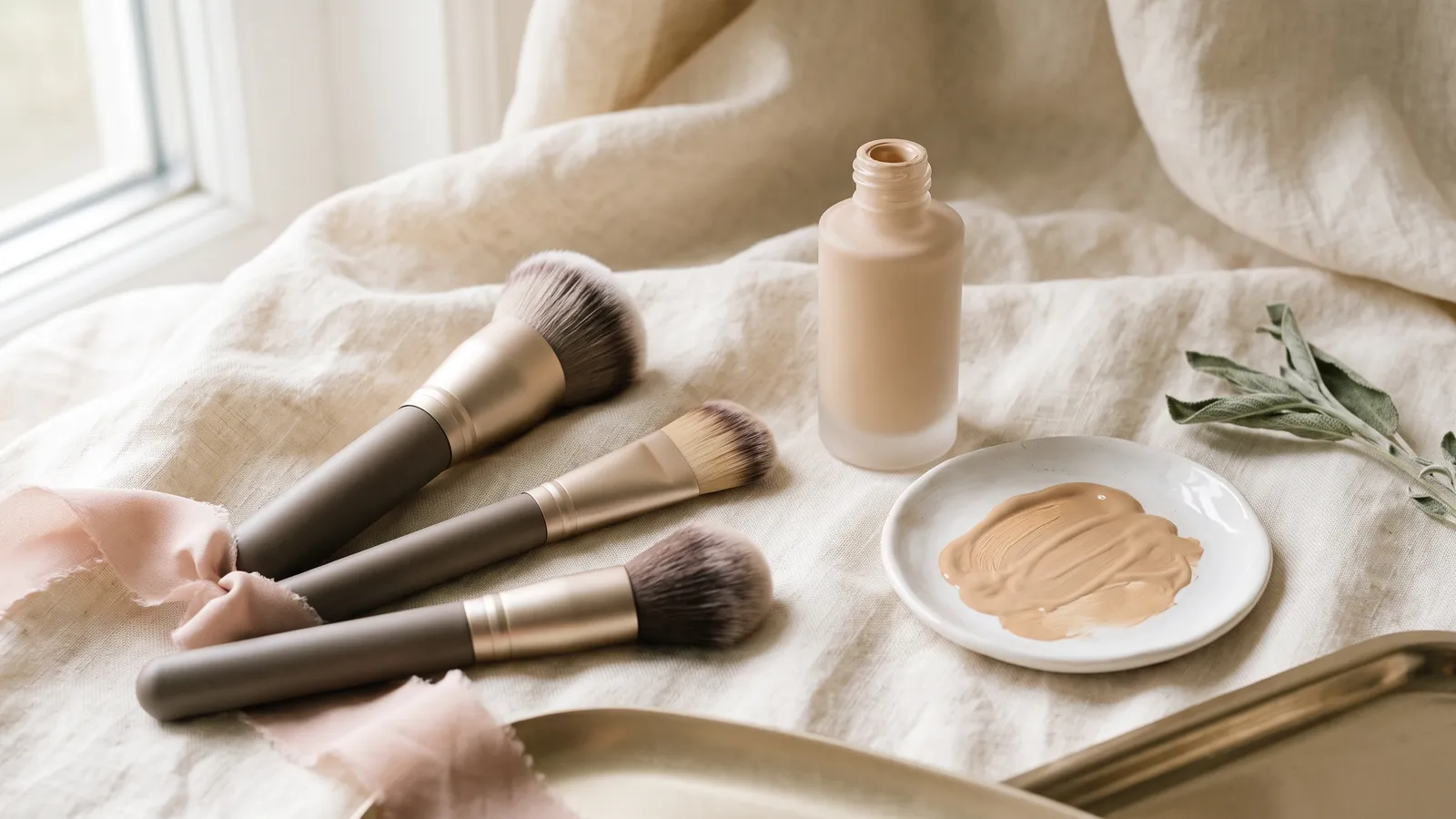
The best foundation brush for most people is the Sigma F80 Flat Kabuki: a dense, flat-top brush that buffs liquid or cream foundation to an even, buildable finish, and the one Marie Claire UK's makeup-artist reviewer calls the easiest for a beginner. On a tighter budget, the Real Techniques Expert Face Brush is the drugstore pick that editors keep for years.
Below are five picks by formula and finish, then how to choose between flat, domed and stippling brushes, and how to keep one clean. If you're new to brushes, our step-by-step guide to how to apply foundation walks through the technique.
Our top picks
See all 5 picks ↓- Check price on Amazon
Affiliate link: we may earn a commission at no extra cost to you.
- Check price on Amazon
Affiliate link: we may earn a commission at no extra cost to you.
- Check price on Amazon
Affiliate link: we may earn a commission at no extra cost to you.
- Check price on Amazon
Affiliate link: we may earn a commission at no extra cost to you.
Quick picks
| Badge | Pick | Why we picked it |
|---|---|---|
| Best overall | Sigma F80 Flat Kabuki | Dense flat top for medium to full, buildable coverage; Marie Claire UK's pick for a novice |
| Best drugstore foundation brush | Real Techniques Expert Face Brush | Dense dome for liquid and cream; a Marie Claire editor's "everything brush" |
| Best budget | e.l.f. Buffing Foundation Brush | Small tapered dome that works with powder, cream and liquid; Marie Claire UK's best affordable pick |
| Best for buildable coverage | ANISA Pinnacle Foundation Brush | Triangular head for the corners of your face; Who What Wear's best for building coverage |
| Best for stick foundation | Hourglass Vanish Seamless Finish Foundation Brush | Dense, contoured head the brand pairs with sticks, creams and liquids |
What does a foundation brush look like?
Most foundation brushes are short, dense and synthetic. Makeup artist Melissa Murdick told Marie Claire that "foundation brushes are almost always made from synthetic fibers (rather than natural hair) because this allows the liquid and cream textures you're working with to apply more smoothly."
The head comes in three main shapes:
- Flat-top (kabuki): a round handle with bristles cut flat across the top. You buff in small circles.
- Domed or tapered: rounded at the tip, a bit like a fingertip. Good for blending around the nose and eyes.
- Flat paddle: a flat, paintbrush-like head with rounded edges. You paint foundation on in strokes.
There's also the stippling or duo-fiber brush, with longer white fibers over shorter dark ones, for a sheerer, tapped-on finish.
Sigma Beauty F80 Flat Kabuki Brush
Best for: anyone who wants an easy, even, medium-to-full coverage finish with liquid or cream foundation.
What we love
- Sigma calls it its best-selling foundation brush and says it gives "a buildable, airbrushed foundation finish." The brand lists a 2016 Allure Best of Beauty award.
- Madeleine Spencer at Marie Claire UK, a beauty journalist and makeup artist, names it the best foundation brush for a novice: "If you struggle with make-up application, it doesn't get easier than a flat kabuki."
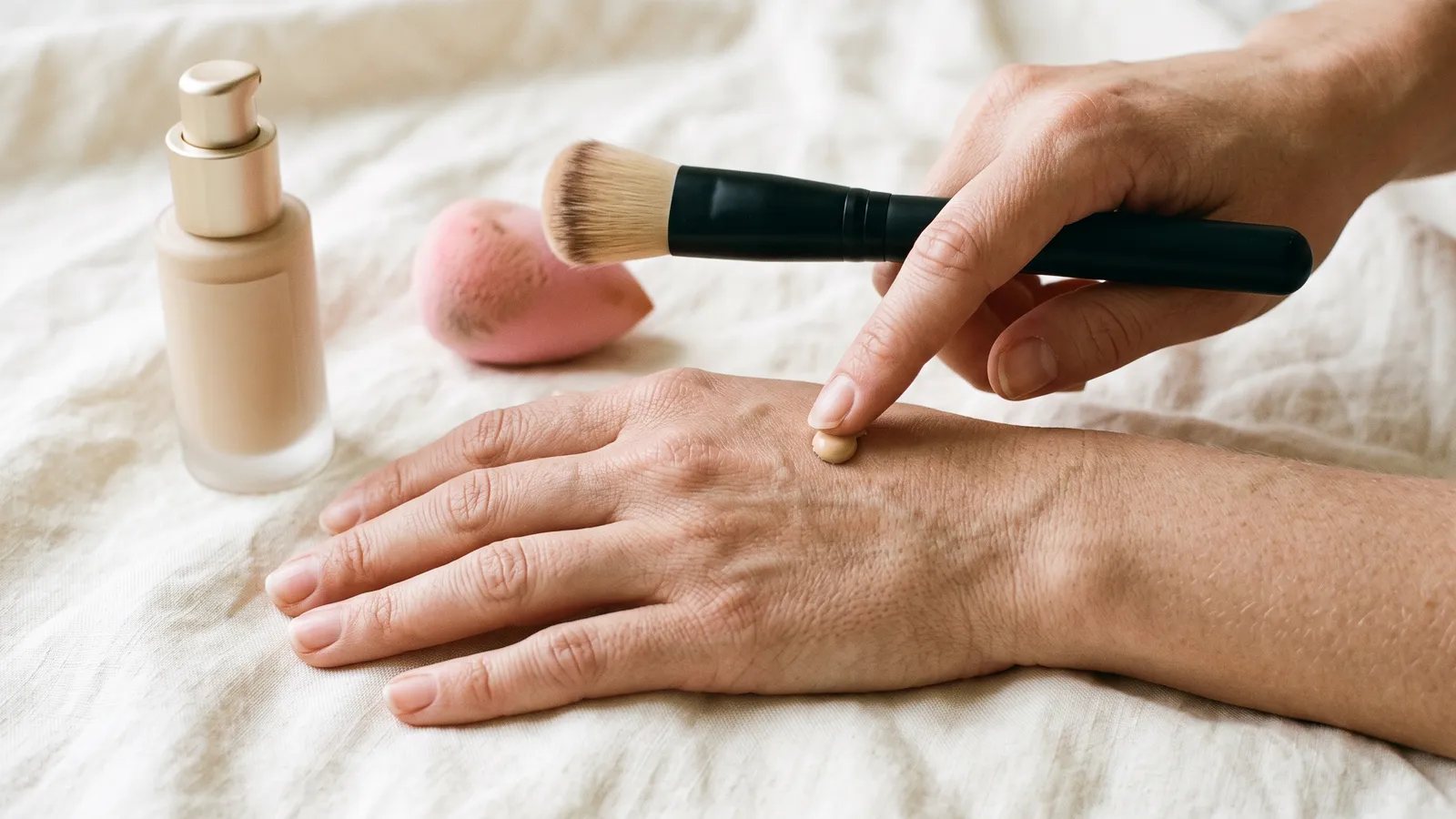
- Her method is simple: dip it in foundation (from the back of your hand is easiest), then "buff in little circles all over your face." She also notes you can build layers with it.
- The flat top is dense, so it holds enough product for fuller coverage without soaking it up the way a sponge can.
Keep in mind
- Spencer's one complaint: "The brush head won't allow you to get into small areas unless you angle it." Use a small brush or your fingertip around the nostrils.
- It's built for liquid and cream. For powder foundation, a fluffier brush is a better match.
Key features: dense flat-top head, synthetic Sigmax fibers, medium to full buildable coverage (brand), 35 x 35 x 155 mm.
How to use: Sigma says to stipple liquid or cream foundation on, then blend it out in circular motions.
Real Techniques Expert Face Brush
Best for: a drugstore liquid foundation brush that also blends concealer and cream blush.
What we love
- Julia Marzovilla, an e-commerce editor at Marie Claire, calls it "more of an everything brush" for foundation, concealer and cream products.
- She says "the super soft synthetic brushes have lasted me years and years," and the short handle "fits into every single makeup bag I have."
- Real Techniques describes it as "a domed, fluffy face brush" for liquid and cream base makeup, with medium to full coverage.
- SheerLuxe named it its pick for affordability and says it "washes well."
Keep in mind
- Marzovilla points out the bristles are densely packed, so it's "better for medium to full coverage looks." For a sheer tint, use less product or a fluffier brush.
- The brand says it's best with cream or liquid; powder is possible but not its main job.
Key features: domed, hand-cut head; UltraPlush synthetic bristles; cruelty-free and vegan (brand).
How to use: Real Techniques says to blend with back-and-forth motions, starting from the center of your face and working outward. The brand suggests cleaning it weekly.
e.l.f. Cosmetics Buffing Foundation Brush
Best for: a budget-friendly foundation buffing brush, and the most flexible pick here if you switch between liquid, cream and powder.
What we love
- e.l.f. says it "can be used with powder, cream, and liquid formulas," and that the "slightly tapered dome shape mimics that of your fingers."
- Valeza Bakolli at Marie Claire UK, who named it the best affordable foundation brush, says it "blends the thickest of foundation formulas effortlessly," and its curved edges reach "the trickier areas around my nose and under my eyes."
- Marie Claire's Marzovilla reaches for it for a lighter-coverage look and says it has "never shed on me, even with constant cleaning."
- It was formerly called the Selfie Ready Foundation Brush, so you may see that name on older reviews.
Keep in mind
- It's small. Covering your whole face takes a little longer than with a full-size kabuki, though that size is what makes it good for touch-ups around the nose and chin.
Key features: tapered dome head, 100% synthetic bristles, cruelty-free (brand).
How to use: buff in small circles from the center of your face outward.
ANISA Beauty Pinnacle Foundation Brush
Best for: going from sheer to full coverage with one brush, and getting into the corners of your face.
What we love
- Who What Wear named it the best brush for building coverage. Celebrity makeup artist Kirin Bhatty says, "This one is great for buildable coverage, and the shape of it really lets you get into the angles of your face."
- ANISA says the "triangular domed head shape easily fits into all areas of the face, including around the eyes, nose, brows, and lips."
- Marie Claire beauty editor Samantha Holender, long a sponge user, switched to it and says it "doesn't eat up my product." Depending on the angle she holds it at, "it buffs or paints."
- The brand pairs it with cream or liquid foundation and tinted moisturizer.
Keep in mind
- It's a splurge for a single brush. The ANISA travel size also turned up on Amazon if you want a smaller one.
- It's designed for creams and liquids, not powder.
Key features: "soft, densely packed, yet flexible fibers" and a patented triangular head (brand).
How to use: hold it flat to buff or on its edge to paint, as Holender describes, and use the point for the sides of your nose and under the eyes.
Hourglass Vanish Seamless Finish Foundation Brush
Best for: stick foundation and fuller coverage, if you want a splurge brush.
What we love
- Hourglass says it's shaped "to fit into all the contours of the face, such as around the nose and under the eyes," and is made "for fuller coverage."
- The brand's FAQ says it "pairs well with sticks, cream, and liquid foundations," and compared with a sponge it "absorbs less product" and gives a streak-free finish, "especially with stick foundations."
- SheerLuxe notes its angled head also works for highlighter and bronzer, and that "a weighted handle allows for optimum control." Makeup artist Nikki Wolff told the magazine it's "a staple for applying base make-up."
- Ultra-soft Taklon (synthetic) bristles.
Keep in mind
- The independent praise we found is older (SheerLuxe, 2021). Newer coverage is mostly retailer reviews, so we've labelled this a brand-led pick.
- It's the most expensive brush on this list.
Key features: dense, contoured head; PETA-approved Taklon bristles (brand).
How to use: Hourglass says to blend foundation "in a sweeping motion all over face."
How to choose a foundation brush
Start with your foundation's texture, then the finish you want. Marie Claire UK puts it plainly: "The most important thing to consider is the type of foundation you use."
Liquid foundation brush
For the best liquid foundation brush, pick by coverage. Murdick explains that a dense, domed brush gives "fuller coverage because having more bristles means it will hold more product," while a flat brush with rounded edges offers "buildable coverage." The Sigma F80 and Real Techniques Expert Face are the dense options here; the e.l.f. is lighter.
Flat foundation brush
A flat paddle brush paints foundation on in strokes. Bhatty told Who What Wear she likes one for traditional foundation because it helps "distribute [the product] onto the face without waste." Her favorite is the Chanel N°100, which we didn't find sold by Chanel on Amazon, so it isn't in our picks. If you like this style, look for soft synthetic bristles and rounded edges so it doesn't leave lines.
Stippling brush for a sheer finish
"For a lighter, tint-like finish, I will reach for a stippling brush," Bhatty says, tapping it on and then swirling. It's a good match for skin tints and thin, serum-style foundations.
Powder foundation brush
Marie Claire UK says a fluffier brush typically gives lighter coverage, while a kabuki or flat brush "will pack on more product." For powder foundation, choose something soft and less dense. Of our picks, the e.l.f. is the one its maker says works with powder.
Foundation brush for stick foundation
Sticks are thick, so they need density. Marie Claire UK says "a stick formula will require something with more dense bristles that can work hard at blending." The Hourglass Vanish and Sigma F80 both fit.
Best foundation brush for mature skin
Use less product and a brush that places it precisely. "For mature skin, I find that less is more," Bhatty told Who What Wear, so choose a brush that applies "your products precisely without using too much." In practice, that means a small dot of foundation, a lighter hand, and building only where you need it. More picks for skin over 50 are on our concern page.
Brush or sponge?
Both work. Makeup artist Jo Baker told Marie Claire that "brushes give you a lovely, buffed finish that you just can't get with fingertips." Dani Parkes told Who What Wear that brushes are great for layering foundation, while she presses lighter makeup in with a damp sponge. If you're unsure, Spencer suggests starting with a double-ended brush so you can try different finishes.
Comparison table
| Foundation brush | Budget | Shape | Formulas (brand) | Coverage | Best for |
|---|---|---|---|---|---|
| Sigma F80 Flat Kabuki | Mid-range | Flat top, dense | Liquid, cream | Medium to full, buildable | Beginners, everyday |
| Real Techniques Expert Face | Drugstore | Domed, dense | Liquid, cream | Medium to full | Drugstore all-rounder |
| e.l.f. Buffing Foundation Brush | Drugstore | Small tapered dome | Liquid, cream, powder | Light to medium | Touch-ups, powder |
| ANISA Pinnacle | Splurge | Triangular dome | Liquid, cream, tinted moisturizer | Sheer to full, buildable | Corners of the face |
| Hourglass Vanish | Splurge | Contoured, dense | Stick, cream, liquid | Fuller | Stick foundation |
How to clean a foundation brush
Marie Claire UK says "weekly is ideal." Use a brush cleanser, baby shampoo or a gentle dish soap, wet only the bristles, and rinse until the water runs clear. Water near the base "can lift the glue on the handle," the magazine warns. Hourglass says to reshape the head and lay it flat to dry.
FAQs
How do I use a foundation brush?
Put a little foundation on the back of your hand, dip the brush in, and start in the center of your face. Buff outward in small circles with a kabuki, or in short back-and-forth strokes with a domed brush. Our how to apply foundation guide has the full steps, and concealer or foundation first covers the order.
Is a flat or round foundation brush better?
It depends on the coverage you want. Marie Claire UK says round brushes "typically hold less product" and give a lighter, airbrushed look, while flat brushes are better for "layering and packing on product." Murdick says flat brushes with rounded edges let you build from sheer to full.
What's the best liquid foundation brush for beginners?
A flat-top kabuki like the Sigma F80. Spencer says "it doesn't get easier than a flat kabuki": dip, then buff in small circles. Sigma says its stipple-then-circle method gives a streak-free finish.
Do I need more than one foundation brush?
No. One dense brush covers most days. Baker likes a couple of brushes for a truly seamless finish, but if you want more tools, a full makeup brush set usually includes a foundation brush plus powder and blush brushes. For eyes, see our best eyeshadow brushes.
How do I make foundation last after brushing it on?
Set it. A light dusting of powder on oily areas and a mist of setting spray help it stay put. Our best setting spray picks are sorted by skin type, and an eyelash curler finishes the look in seconds.
Pick the brush shape that matches your foundation, use less product than you think, and wash it weekly: that's most of a smooth base.