Puffy under-eyes are one of those things that look worse in the bathroom mirror at 7 a.m. than they do to anyone else. Still, if you want them calmer, the fixes are quick and cost next to nothing. Then there's the question everyone actually searches: which eye puffiness cream is best? This guide covers both, in that order, because the habits do more than the cream.
Products that help
Details ↓- Best caffeine eye cream for puffinessCeraVe Skin Renewing Eye Cream with Caffeine, Peptides and NiacinamideDrugstoreCheck price on Amazon
Affiliate link: we may earn a commission at no extra cost to you.
- Best eye cream for dry, sensitive skinCetaphil Hydrating Eye Gel-Cream with Hyaluronic AcidDrugstoreCheck price on Amazon
Affiliate link: we may earn a commission at no extra cost to you.
- Check price on Amazon
Affiliate link: we may earn a commission at no extra cost to you.
Why your under-eyes get puffy
The American Academy of Ophthalmology (AAO) lists the usual reasons:
- Fluid. It can "pool in the weakened tissues under the eye," and you retain more of it "after waking up or after eating salty food."
- Age. Over time, tissues around the eye weaken and sag, which "allows fat to shift forward into the lower eyelids, making them look puffy and swollen."
- Genes. Under-eye bags "can run in families."
- Allergies, smoking and short sleep all make it worse.
The useful bit: fluid puffiness comes and goes, so it responds to cold and habits. Fat that has shifted forward doesn't. Cleveland Clinic notes that for some people eye bags are genetic, from "fat pad prominence, bone structure or skin laxity," and "can be difficult to fully correct without medical intervention." That's not a cream problem.
How to reduce under-eye puffiness: 7 steps
1. Use cold, for a few minutes
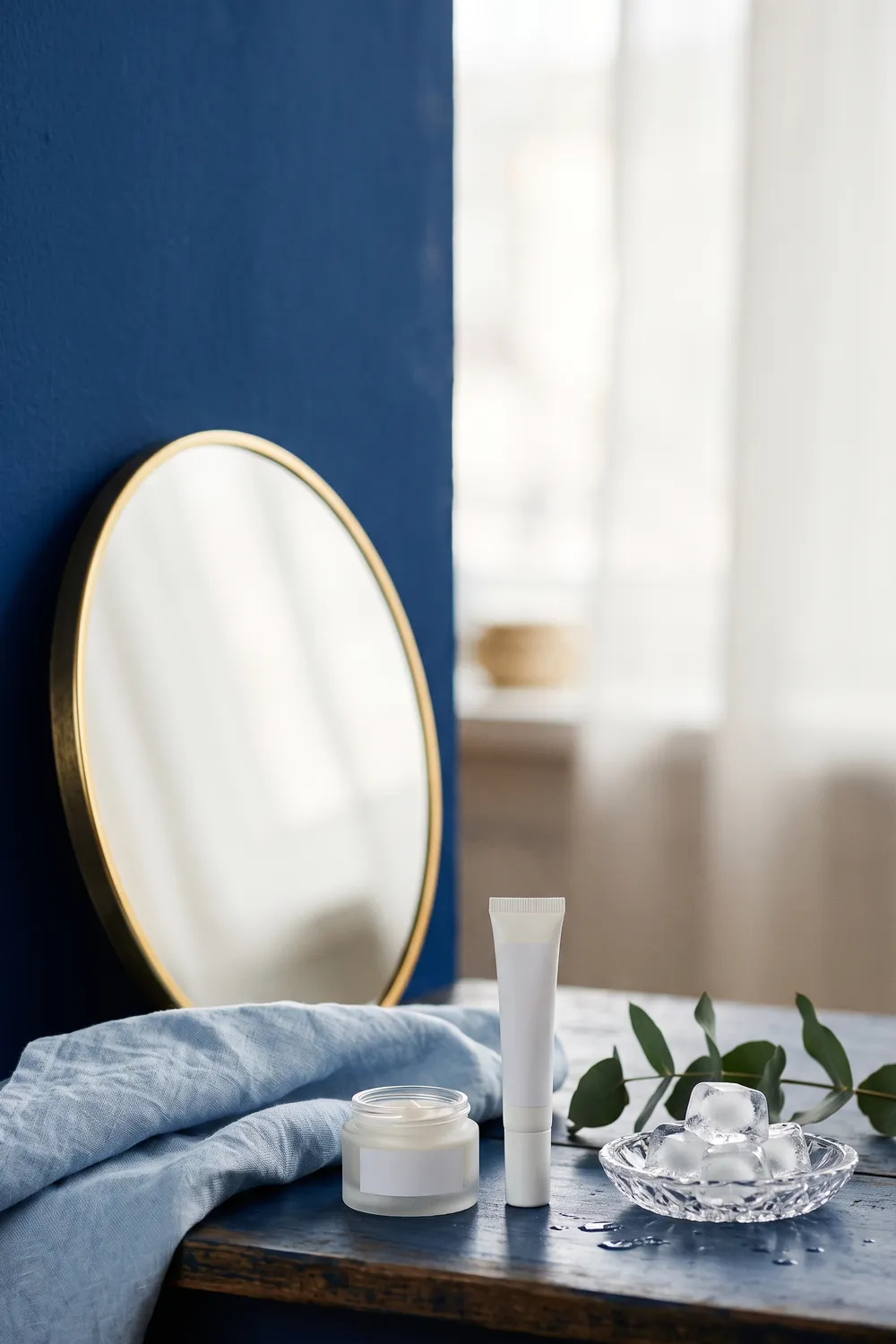
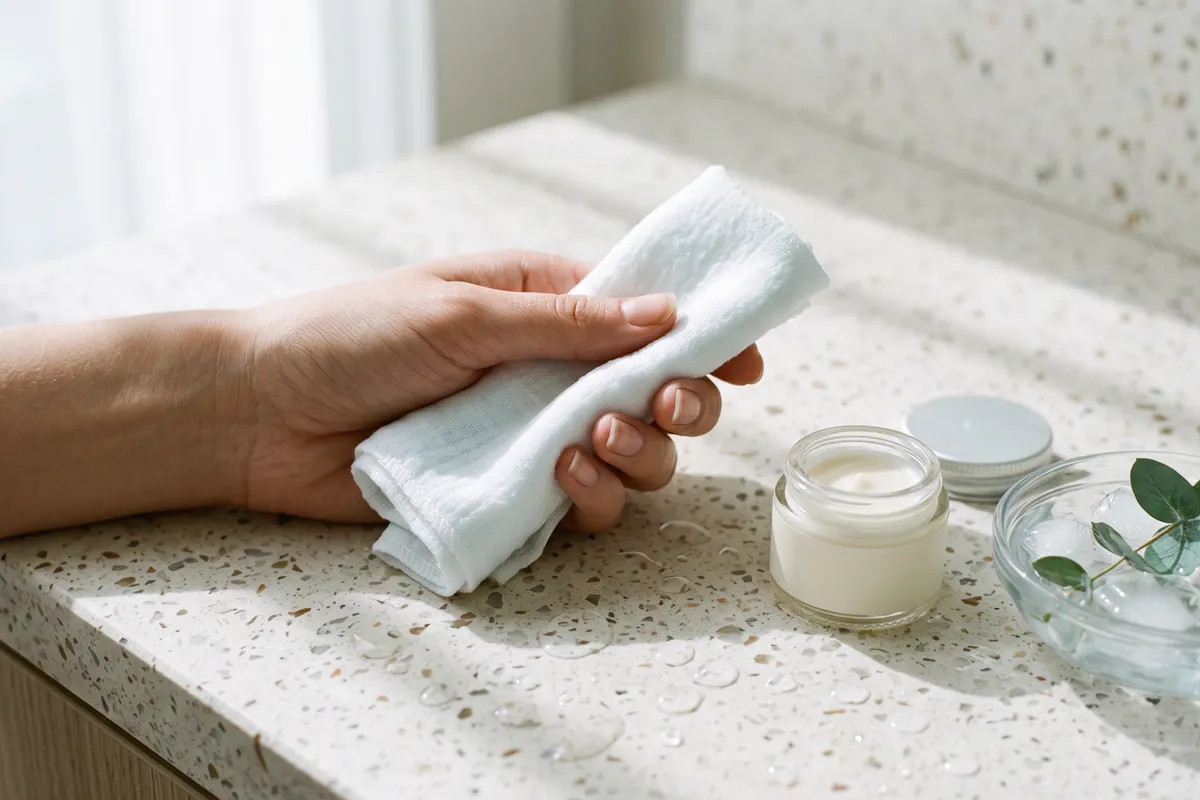
The AAO's method: wet a clean washcloth with cool water and hold it around your eyes "for a few minutes, applying very gentle pressure," sitting upright. Cleveland Clinic adds that an ice pack or a bag of frozen vegetables works too, as long as it's "wrapped in a towel to protect your skin." The cold helps "restrict blood vessels and reduce swelling."
Never put ice straight on the skin. A cool spoon or a chilled eye cream feels nice, but the washcloth does the same job for free.
2. Sleep with your head a little higher
The AAO suggests propping up the head of your bed "a few inches" or adding an extra pillow, which "can prevent fluid from settling around your eyes during sleep." It also recommends seven to nine hours of sleep. Not glamorous. It works.
3. Cut back on salt and evening drinks
Salt makes your body hold water, and Cleveland Clinic says that "can lead to swelling and puffiness in your eyes." The AAO says to "avoid drinking fluids before bed and limit salt in your diet." If you wake up puffiest after a takeout dinner, that's your clue.
4. Calm allergies, and check your eye products
Allergies cause both puffiness and rubbing, and rubbing makes it worse. The AAO notes that feather pillows, pets on the bed and "pre-sleep skin care products can cause an allergic response."
This one surprises people. Cleveland Clinic says mascara, eyeshadow and eye creams can contain fragrances, dyes and preservatives that irritate the eye area, and suggests stopping them "for at least a couple of weeks to see if your symptoms improve." If a new eye cream is making things puffier, it's the cream.
5. Pat eye cream on with your ring finger
The AAD says to use your ring finger "because it is the weakest finger and will not pull too hard on this delicate skin." A rice-grain-sized dot per eye is plenty for most creams. Tap it along the bone under your eye, not right up to your lashes, and let it spread on its own.
Cleveland Clinic dermatologist Dr. Sean McGregor puts eye cream after your serum and before your moisturizer. He also makes a fair point: because the skin around the eyes can be sensitive, he "usually recommends moisturizers over eye creams to avoid further irritation." So if your face moisturizer is gentle and fragrance-free, using it under your eyes is a perfectly good option.
6. Wear sunscreen and sunglasses
Sun doesn't cause puffiness, but it does make the under-eye area look older and darker. The AAO says sun exposure can make some people's skin produce more melanin, leading to dark circles. The AAD adds that "wearing sunglasses can help reduce lines caused by squinting." Our guide on how to prevent wrinkles covers the rest.
7. Use concealer for the days it hasn't gone down
The AAO itself suggests "makeup concealer to cover shadows under your eyes." If shadows are the problem rather than swelling, a peach corrector and a light layer of concealer do more in two minutes than any cream. Here's how to apply concealer without it creasing.
Eye puffiness cream: what the best ones have in them
The best eye puffiness cream is one with caffeine (for a short-term, less puffy look), a moisturizer like hyaluronic acid (so the area looks smoother), and no fragrance. Cleveland Clinic says the appearance of eye bags "can sometimes improve with the help of skin care products that contain caffeine, retinol or other ingredients that reduce puffiness." Note the "sometimes" and the "appearance." That's honest, and it's the right expectation.
What each ingredient is for:
- Caffeine: the morning depuff. The effect is temporary, so it's a "today" product, not a fix.
- Hyaluronic acid and ceramides: hydration. Dry, crepey under-eyes look smoother when they're moisturized.
- Retinol: fine lines and texture, slowly, over months. It's not a depuffer.
Best retinol eye cream: how to use it without irritation
Retinol around the eyes is where people overdo it. Dermatologist Dr. Tina Alster told the AAD she advises patients to use "the least-intense retinoid formula they can find, and use it every other night to start, slowly building up." She also says to use retinoids "only at night" with sun protection during the day.
Two cautions from the same AAD page. People with "skin allergies or dryness are probably not good candidates" for retinoids. And: "Retinoids should not be used during pregnancy." If you're pregnant, trying to conceive or breastfeeding, skip the retinol eye cream and ask your doctor what's safe.
Best anti-aging eye cream for your 40s, 50s and 60s
Here's the honest version: the ingredients don't change by decade. What changes is how much moisture your skin wants. Dr. Rebecca Kazin told the AAD that "perimenopausal people and everyone 50 and older should be using a cream-based moisturizer." So:
- 40s: a caffeine and peptide eye cream in the morning, and a gentle retinol at night if your skin tolerates it.
- 50s and 60s: a richer, hydrating eye cream, with retinol a few nights a week. If retinol is too much, hydration alone still makes the area look smoother.
If you're already using a retinol night cream on your face, you may not need a separate retinol eye cream at all. See our best night cream and best moisturizer to use with retinol picks.
Picks that help
CeraVe Skin Renewing Eye Cream with Caffeine, Peptides and Niacinamide
Best for: a morning eye cream for puffiness and fine lines, especially in your 40s.
- CeraVe's amazon.com listing says it has "caffeine to help visibly reduce puffiness," peptides "to help reduce the appearance of fine lines & crow's feet wrinkles," and niacinamide.
- It's fragrance-free, paraben-free, "ophthalmologist tested, and suitable for contact lens wearers," and has CeraVe's three ceramides.
- Keep in mind: caffeine's effect is short-term. Use it as a morning step, not a fix for genetic bags.
Cetaphil Hydrating Eye Gel-Cream with Hyaluronic Acid
Best for: an affordable eye cream for dry or sensitive skin.
- Cetaphil says hyaluronic acid "provides instant hydration lasting 24 hours" in a "lightweight formula" that "absorbs quickly."
- The listing says it's "non-irritating and hypoallergenic" and "suitable for sensitive eyes and contact lens wearers." Scent: unscented.
- Keep in mind: it's a hydrator. It has no caffeine or retinol, so it's about smoother-looking skin, not depuffing or lines. Directions: "a pearl-sized amount around eye area," morning and night.
RoC Retinol Correxion Eye Cream
Best for: a drugstore retinol eye cream for fine lines in your 50s and up.
- RoC says it combines "RoC Retinol & our mineral complex" in a hypoallergenic cream and targets "puffiness, dark circles & wrinkles." The listing's scent is unscented.
- Directions: "Apply in small dots around the eye area." RoC warns "you may experience mild tingling or redness" at first, and says to use SPF 15 or higher during the day.
- Keep in mind: it's retinol, so follow Dr. Alster's advice and start every other night, and skip it if you're pregnant.
FAQs
What is the best eye serum vs. an eye cream?
The best eye serum and the best eye cream do the same job in different textures. Serums are thinner and layer easily under makeup; creams are richer and suit dry skin. Pick by texture and ingredients (caffeine, hyaluronic acid, retinol), not by the name on the box.
What's a good eye cream for dry skin?
A good eye cream for dry skin is fragrance-free with hyaluronic acid or ceramides, such as the Cetaphil gel-cream or the CeraVe cream above. If yours still feels tight, a thin layer of your regular fragrance-free face moisturizer works too.
Is there an affordable eye cream that works?
Yes. All three picks here are drugstore products. An affordable eye cream with caffeine or hyaluronic acid does as much for puffiness as a splurge one, because what helps most is the cold, the sleep and the salt.
Do under eye tightening creams work on bags?
Not on true bags. An under eye tightening cream can make the skin look smoother for a few hours, but it can't move fat that has shifted forward. The AAO lists in-office options such as laser resurfacing, chemical peels, fillers and eyelid surgery for that.
Does an under eye brightening cream help dark circles?
Sometimes, a little. Dark circles have several causes, including genetics, thin skin and shadows from puffiness, so a brightening cream can only do so much. Concealer is the most reliable fix for the shadow part.
Should I put hemorrhoid cream under my eyes?
No. Cleveland Clinic says to avoid this social media trend. Dermatology resident Dr. Angela Wei says these products "may provide temporary relief, but I don't recommend their use around the eyes."
Cool water, a higher pillow and less salt first; then an eye cream for the rest.